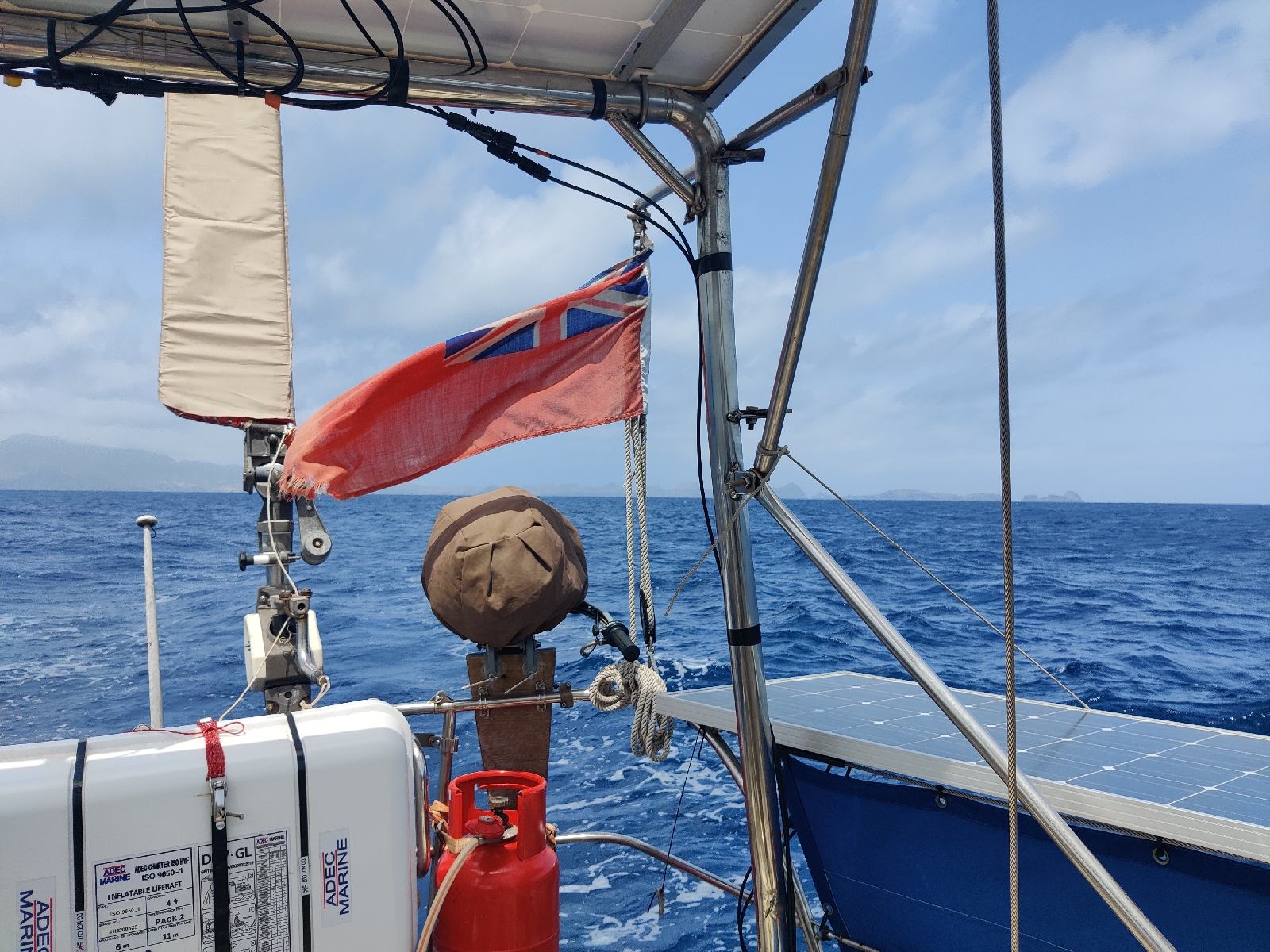
Tuesday, 5 September 2023

Work, rest and play in Las Palmas

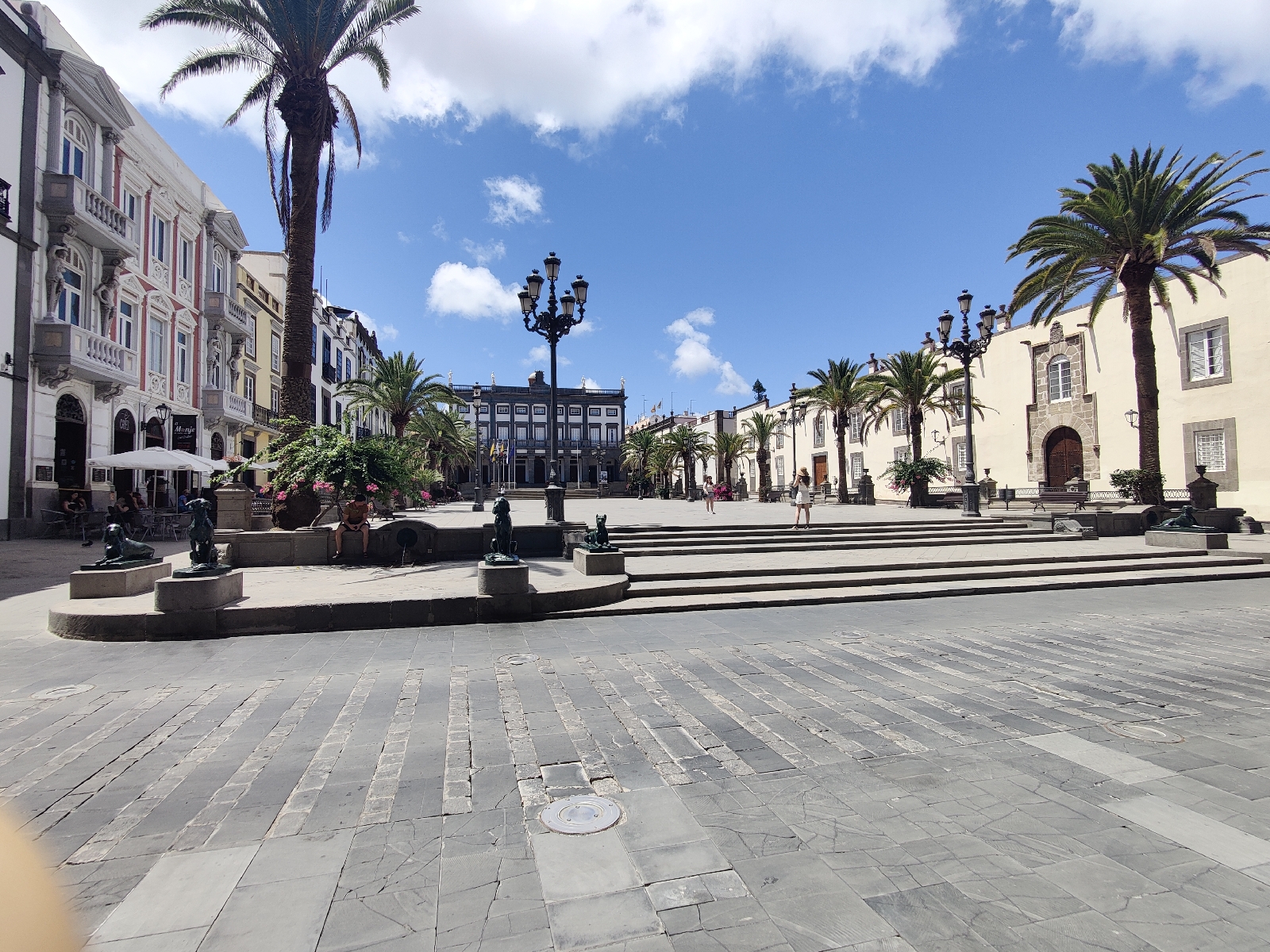
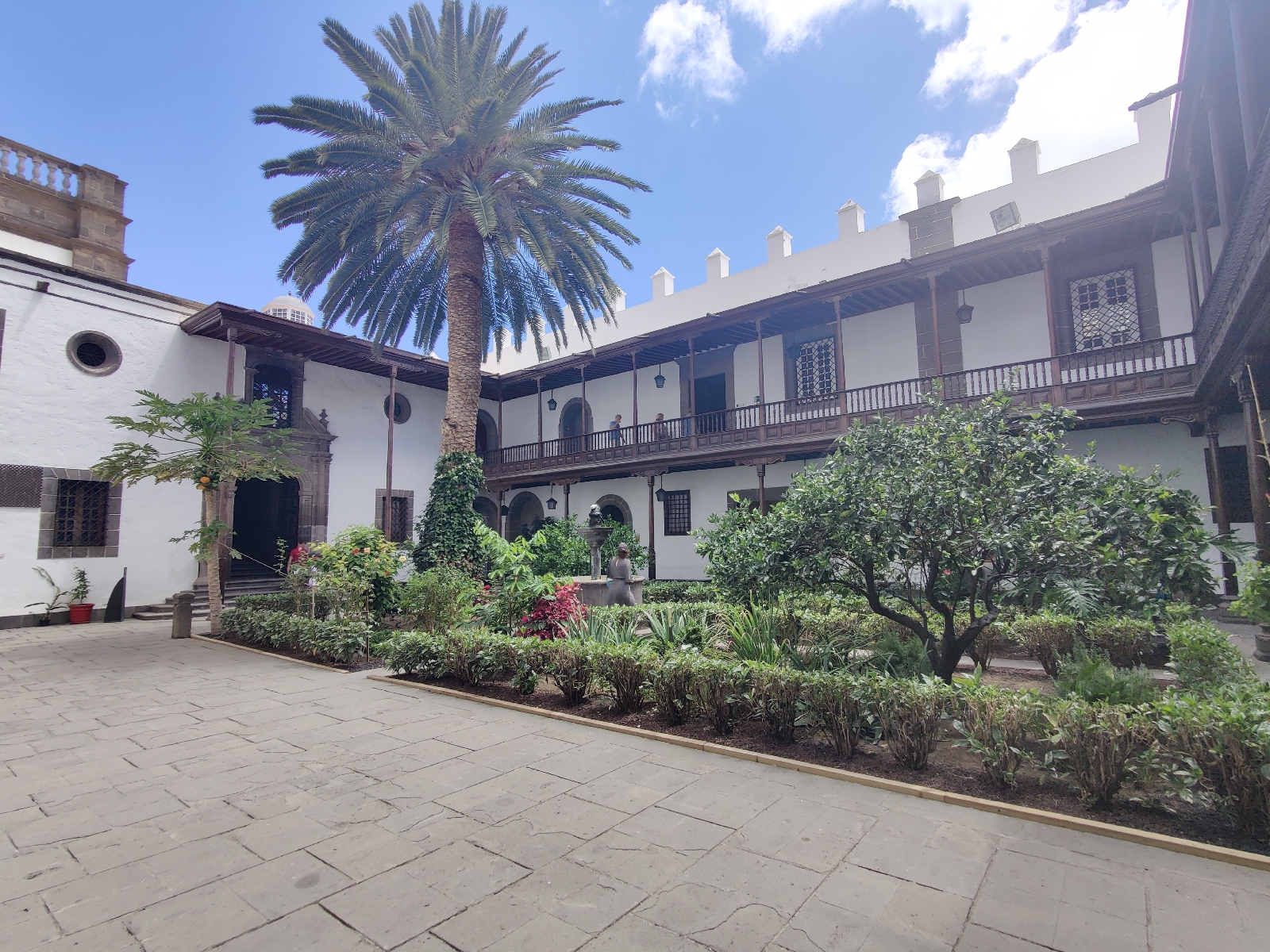
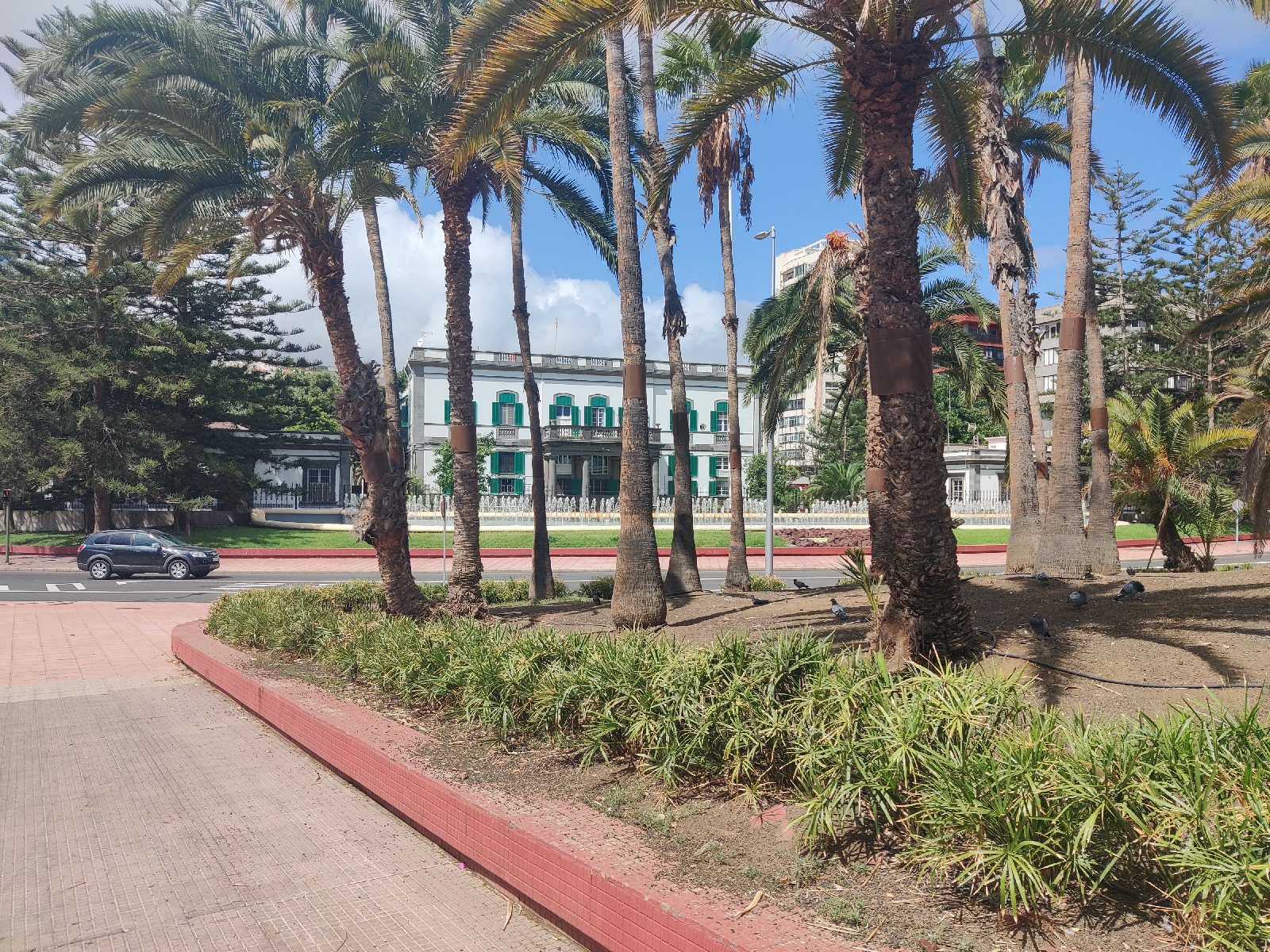
Above, the square/plaza opposite the very impressive Cathedral (see next) in the old town..
We've been here a week now but it's difficult to know where the time has gone. We have though got through some of the seemingly endless list of boat jobs.....

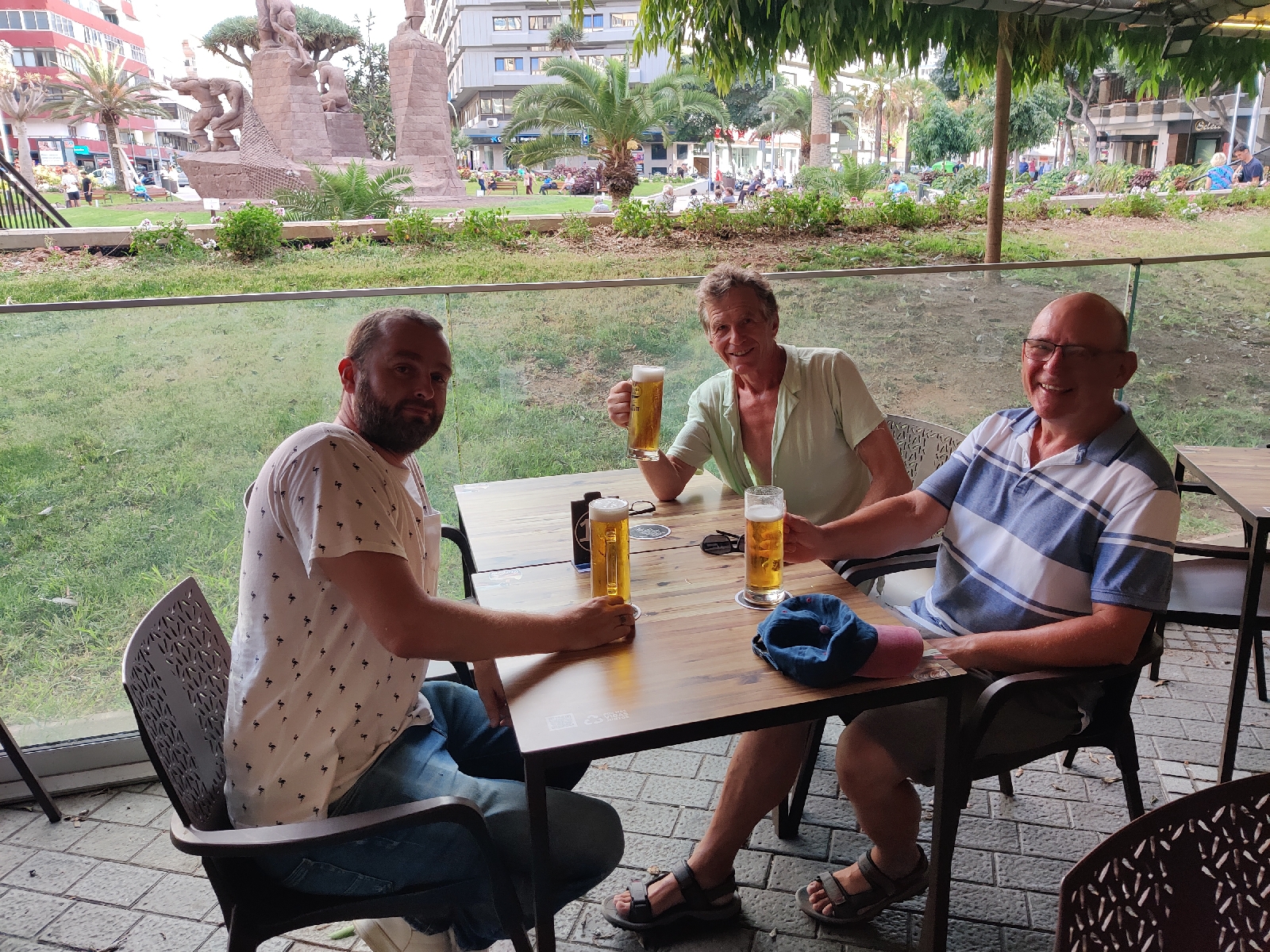
and we've enjoyed some social time including doing our bit to support Anglo-French relations.

It also appears that we should be able to keep our berth here in Las Palmas for the duration of Sharon's and Stephen's' family visit commencing 12th September - When we arrived the very friendly and helpful marina man warned me that we could only book ahead for seven days at a time and that we would be subject to seven days notice to leave because of the priority given to the ARC boats which start arriving in Las Palmas about now. When I went to book a further seven days yesterday the same guy was very laid back about it and said, come back in about a week or so (pointing to the 16th September on the Calendar) and pay me then and tell me how much longer you want to stay! 🤞

Our first full day here, last Tuesday was a pretty lazy one.  To coin a Monty Python phrase, it was a sort of "all of a sudden nothing happened" type of day. I did nothing at all apart from my laundry and making a start on updating this blog with an account of our time in Madeira.

Ah, I forgot the small matter of spending, or at least, commiting to spend, a large wod of cash and in the process wiping out my emergency sailing budget in one go. After a vidio call with Will from Hydrovane, I finally ordered the necessary replacement parts for the Hydrovane. They will be delivered to my Spanish friend Agustin who lives in Pasito Blanco on the southern tip of the island.

Wednesday was another day of rest and blog writing while Mick went off to explore the town. 

That evening we enjoyed the first of our Gran Canarian social events - we met up with Ines' globe trotting brother, Russell, who having spent many years in Columbia, Thailand and Japan has spent the last few years in the Canaries and has most recently moved to Las Palmas from Lanzorote. Russell took us to a lively bar/restaurant in the modern city centre where we spent a most enjoyble evening. Stephen and Ines will be staying with Russell when they visit with Sharon in a couple of weeks.
On Thursday  we got stuck into some serious boat maintenance however. I spent the day crawling around in cockpit lockers and under the cockpit floor maintaining the autohelm and main steering gear. 

This required becoming something of a contortionist given the tight and awkward spaces involved. It was also quite dirty work with generous helpings of crease and grime and as a result I looked non too savoury...

Whilst I was performing these antics Mick was installing switches in the water maker's electrical circuit. A fiddly and time consuming job. He's very pleased with the results because they light up when on! 
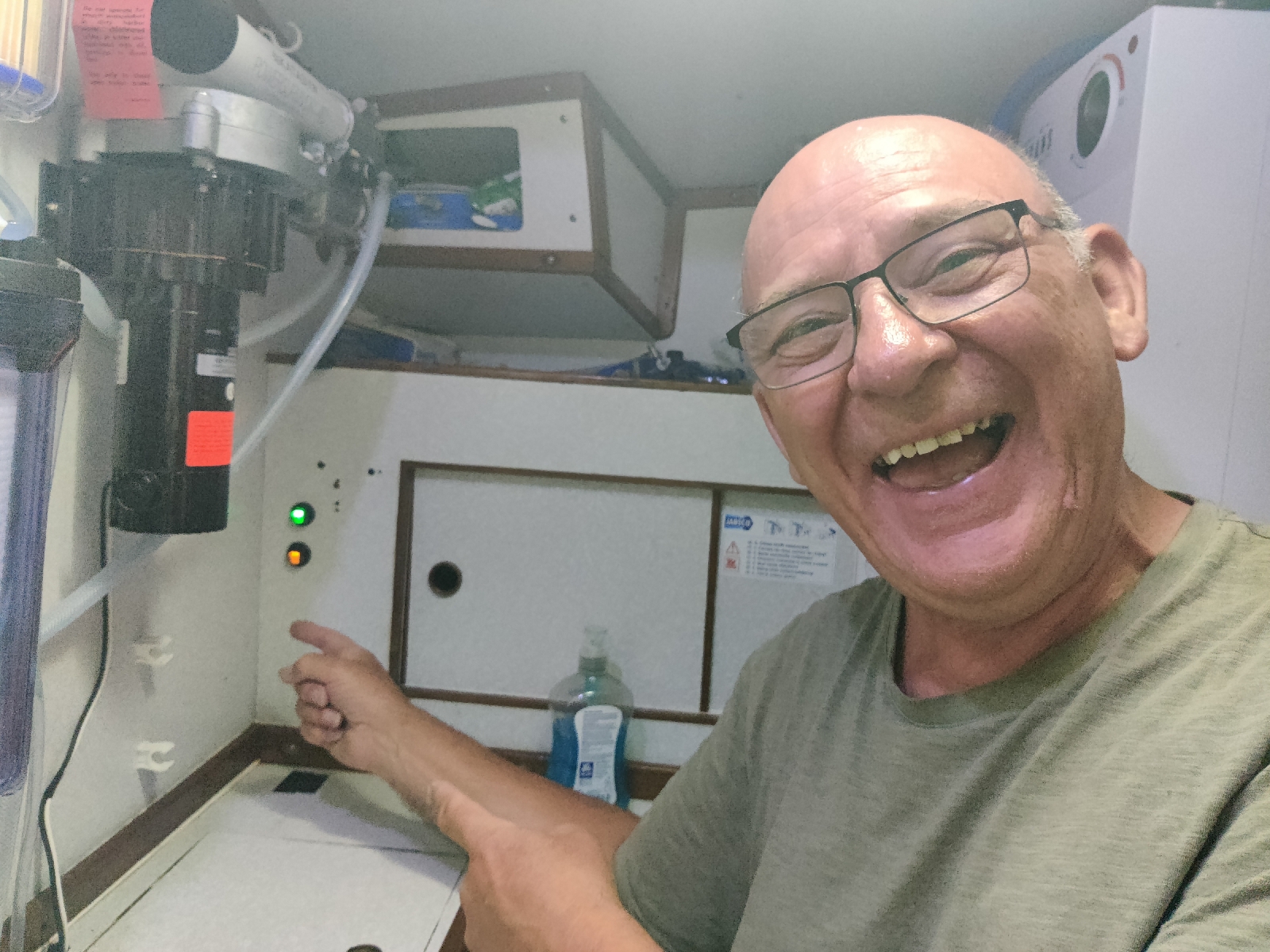
Indeed because the boat is to be effectively harbour bound for the next two months we have had to "pickle" the water maker's membrane. This involves sucking up a cocktail of chemicals into the membrane housing to kill off any biological growth that may be present and which would otherwise clog up the delicate membrane through which the sea water is forced when the water maker is in operation.

Friday was another day of boat jobs and one where once again I spent a great deal of time up the mast. 
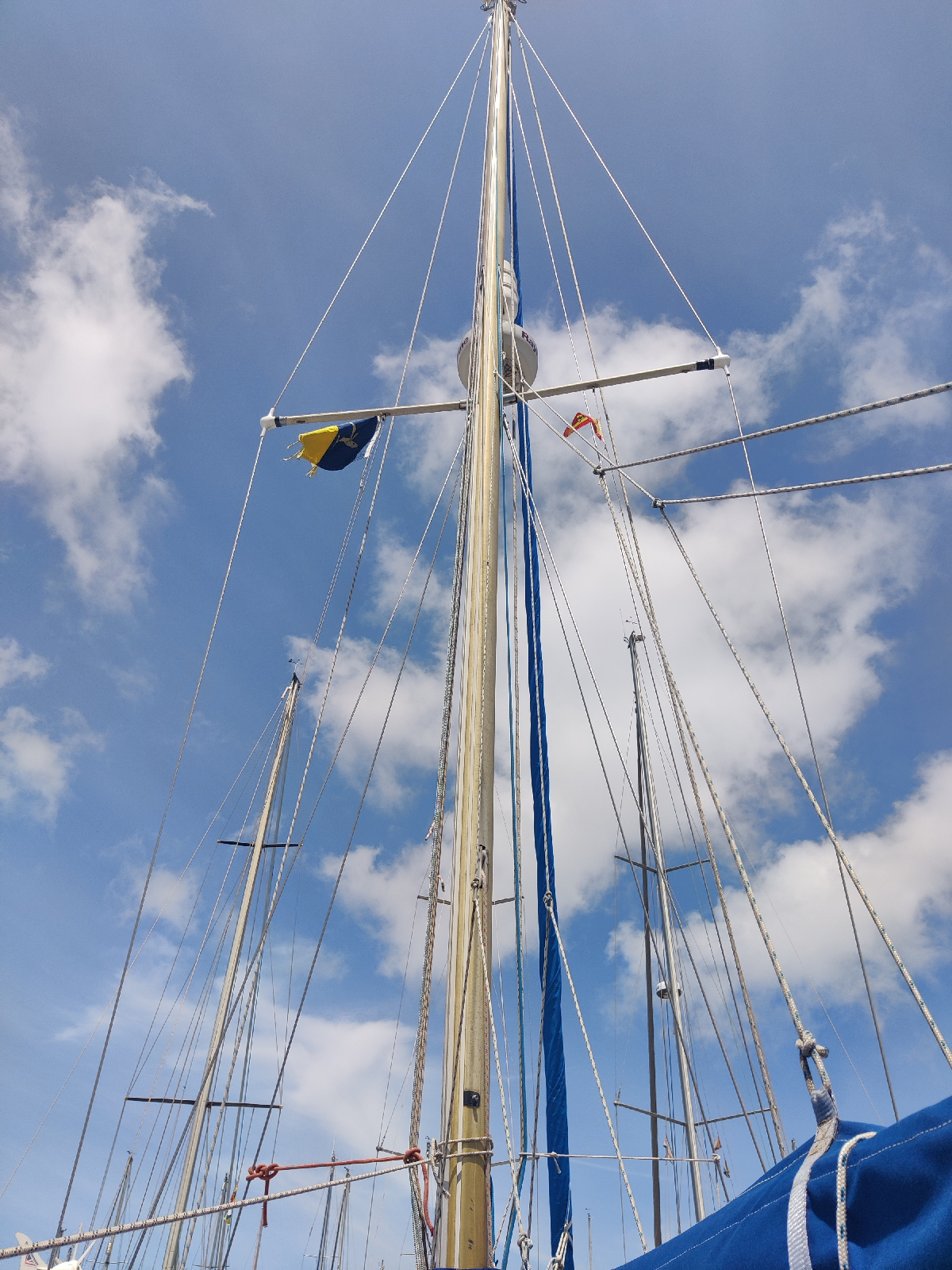
I had four jobs to do up there. One was to replace the pulley block through which the cruising chute halyard ran (or rather was supposed to run). This you may remember disintigrated on our passage from Vigo to Porto Santo. A closely related job was to check the other hardware on top of the mast to ensure nothing else was suspect. The broken block was clearly no where near robust enough for the job it was doing and I really should have noticed that before and replaced it in 2021 when I replaced the shackle that attached it to the mast head. Or perhaps I did - because it's most likely that the original block would not have survived chrashing to the deck - but only had a flimsy block to hand and then forgot all about it! Thankfully all the other fittings up there looked sound and robust.

A further job was to re-reeve the mainsail haliard should run through a sheeve at the top of the mast and down the inside of the mast and out through another sheeve at the bottom but which for the last few weeks was, following the parting of the halyard from the sail (for the second time since buying the boat) on the passage from Plymouth to Falmouth, reeved on a temporary basis through an external block attached to the top of the mast. Having spent hours doing this previously with the help of my friend Bill on Bonny's mooring on the Medway, I was prepared for another long and tiresome escapade. What made this job such a fiddly one was that Bonny's mast was lined with slabs of polysterine - presumably to stop or at least minimise the noise halyards make when they flap around inside the mast. All well and good, but it makes running a length of rope from the top to the bottom an absolute nightmare - it keeps getting stuck! Bill and I only managed to do it before by removing quite a lot of the polysterine! Perhaps as a consquence, this time it would be easier! 

Step one: lower the genoa so that I can use the genoa halyard which also runs through a sheeve at the top of the mast to climb up (I had previously used a halyard that went through the block that broke!!!)

Step two: remove the sheeve at the bottom of the mast through which the halyard is supposed to exit

Step three: put absolutely everything (of course one always forgets something at this point) I need in a bucket and haul it up the mast on a spare halyard

Step four: climb up the mast using the mast climbing kit (rather like a cross between rock climbing gear and a bosun's chair) with a safety line attached to another halyard by a clever device that enables you to slide it up the halyard but which jams tight if weight is applied to it.

Step five: tie one end of long length of this twine on to one end of a piece of bicycle chain (this is ideal for pushing over the top of the sheeve and provides the weight to pull the twine down the mast).

Step six: lower the chain and twine down the inside of the mast until you think it's near the bottom sheeve. 

Step seven: call Mick up from below and ask him whether he can find the bicycle chain 

Step eight: jiggle the chain up and down (he hears it but can't see it) - repeat numerous times

Step nine: pull the chain and twine back up the mast and do what should have been done first - lower it down the outside and mark the twine so that you know when it will reach the sheeve:

Step ten: repeat step eight repeatedly!

Step eleven: Mick looks for various devices to help locate and retrieve the chain - takes ages!

Step twelve: Mick locates bicycle chain and pulls end out of the mast but it gets jammed!

Step thirteen: have a shouted debate about what to do next - decide to remove the bottom sheeve through which the genoa halyard runs to see if we can un jam it there. This is the sheeve through which the halyard on which I am suspended, runs and so....

Step fourteen: come back down the mast!

Step fifteen: - lunch!

Step sixteen: start to remove sheeve before realising that the track for the storm trysail (a small sail to use in place of the mainsail in gales) runs over it and so it cannot be removed without also removing about 50 rivets holding the track to the mast!

Step seventeen: abandon that idea.

Step twenty:  remove the sheeve for the topping lift (that's the piece of rope that runs from the end of the boom to the top of the mast and down to its base so that the boom can be held up when the mainsail is not set).

Step twenty one: find the chain jammed at the top of the sheeve and spend ages fiddling and jiggling around with scredrives and things until the chain miracously unjams and falls down to the mainsail sheeve.

Step twenty two: pull chain out of mainsail sheeve until it jams again!

Step twenty three: more fiddling and jiggling until eventually the chain comes out with the twine still attached.

Step twenty four: go back up the mast, tie a stronger length of chord to the top end of the twine.

Step twenty five: Mick gingerly pulls on the twine until the chord comes out the of the sheeve.

Step twenty six: attach the halyard to the chord and tape up carefully to achieve a smooth join.

Step twenty seven: Mick pulls on chord until the halyard exits the mast!!!!!

Step twenty eight: reeve the new emergency halyard through the external block (this so that if heaven forbid, we lose the halyard up the mast again - we can get the sail back up easilly).

Step twenty nine: climb back down the mast  

Step thirty: replace the two sheeves at the bottom of the mast and put everything else back in its proper place

Step thirty one: drink a cold beer!

Whilst all this was going on and in between his repeated trips out to the base of the mast, Mick was working down below on trying to coax our portable fridge which can freeze stuff and can therefore - if it works - store frozen meat and most importantly ice during our long passages and when at anchor in picturese Carribean bays! Initially however, his efforts were in vain, the machine refused to power up at all - which was a backward step. Subsequently, however a second spell of work proved successful and we now having a working freezer!

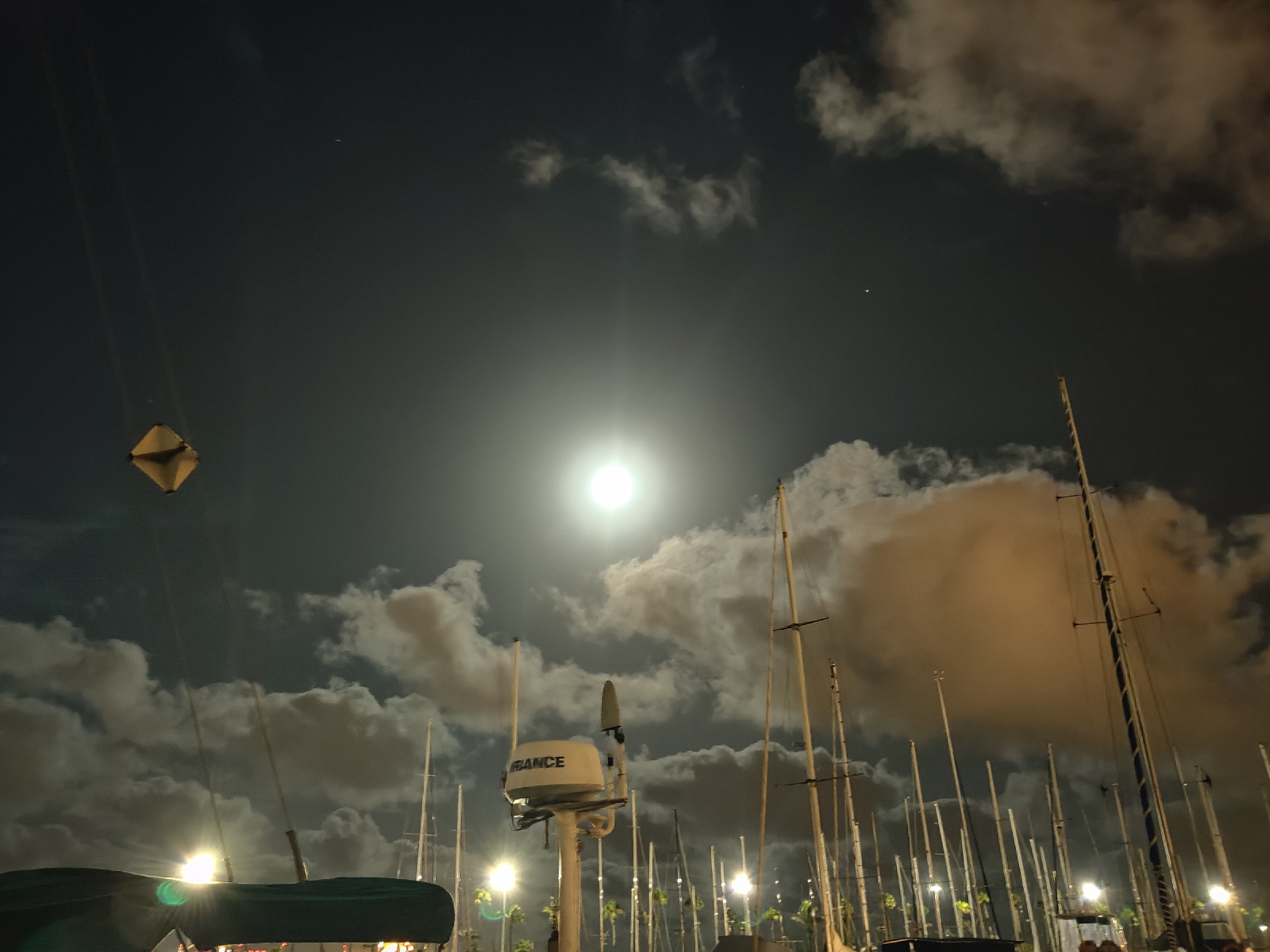
Friday 1st of September included the night of the full blue moon and very bright it was too. My granddaughter Maliyah was doing a school holiday project on the moon and so I sent her mum lots of photos of it over the harbour which was just as well because of course it was cloudy at home and they didn't see it.
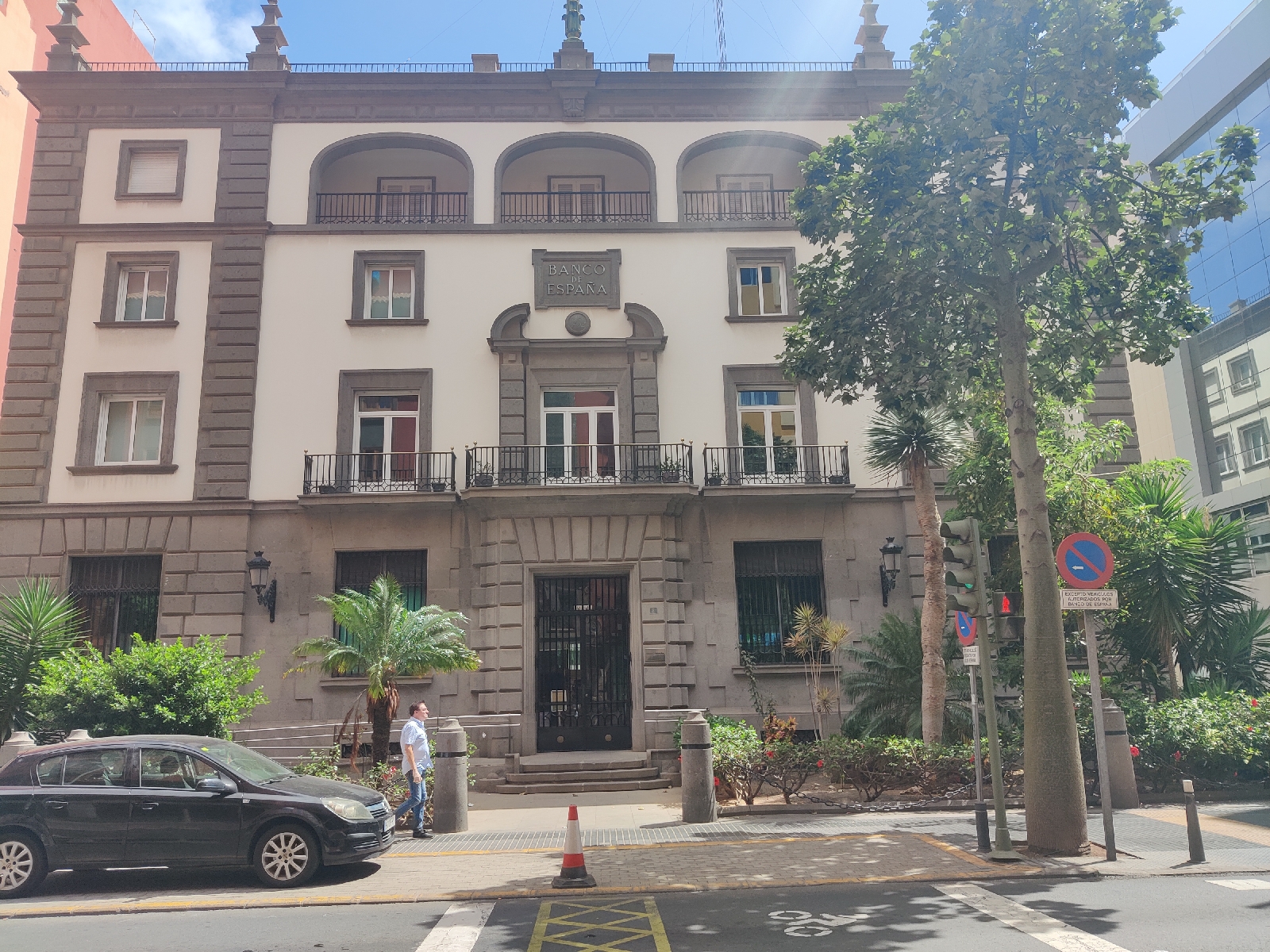
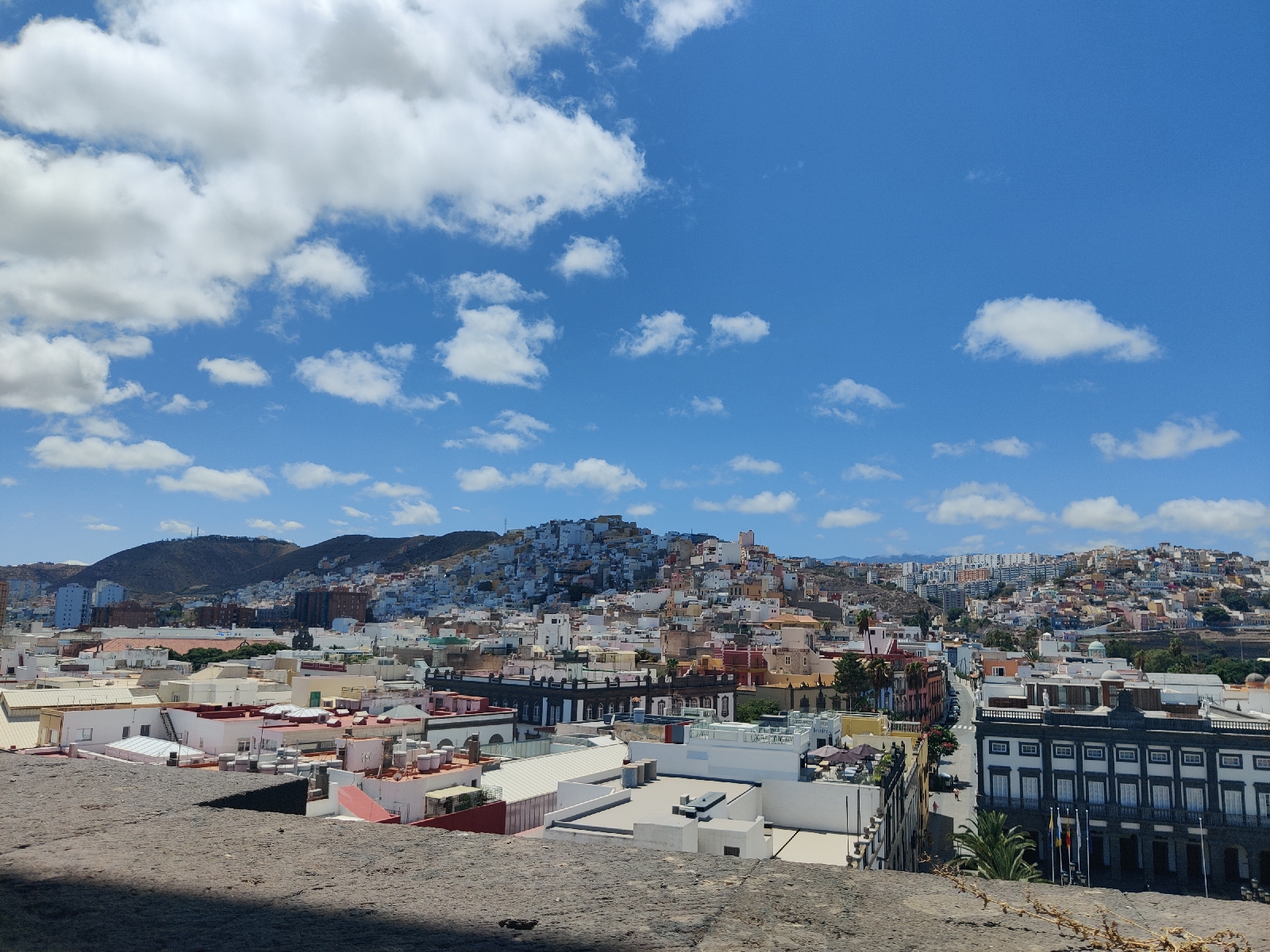
On Saturday the crew were granted shore leave and went off to explore the old town and very attractive it is too with its magnificant cathedral and colonial era plazas and buildings. Like Gijon, there were numerous narrow streets with restaurants and bars a plenty.
Saturday was also the day we met Franck, and enigmatic Frenchman and ex Ship's Captain, who seems to have spent the last 10 years or so sailing around the world in various sailing boats. 
Some years ago on his previous boat - a modern racing machine with a swinging keel he was almost sunk in a storm of the South African coast. The keel strated to part company with the rest of the boat and his sails blew out. Somehow he managed to make port and affect temporary repairs and then sailed on to Horta in the Azores where he found his current very tough looking 50 foot aluminium boat - "Sunditude" for sale. He then sailed his previous boat on to Jamaica where he had found a buyer. He's in Las Palmas waiting for a new set of sails to be made and undertaking various other repairs having experienced yet more bad weather in the recent past. He's a very entertaining and fun loving character. Not quite 60, the internet age seems to have missed him, he doesn't even seem to have a mobile phone! He does though have an email address so we'll be able to keep in touch. He will probably head down to the Cape Verde Islands in a couple of months too.

Sunday was another day that seemed to disappear without very much happening. I walked round to the Marina office and booked our berth for another 7 days and did a couple of minor jobs.

Yesterday, Monday, was a more productive day, I managed to service all the cockpit winches and Mick got the freezer working again.


This afternoon - Tuesday 5th September we're meeting Malcolm, a fellow OCC member, for a beer, who may be able to help us resolve the ongoing issues with our Satphone!

Mick flies home for 6 weeks or so tomorrow and Sharon, Stephen & Ines and kiddies fly out to join me for a week on the 12th. I'll plough on through the still growing jobs list whilst I'm waiting for them to arrive.




Wednesday, 30 August 2023

Porto Santo to Quinta do Lorde, Madeira

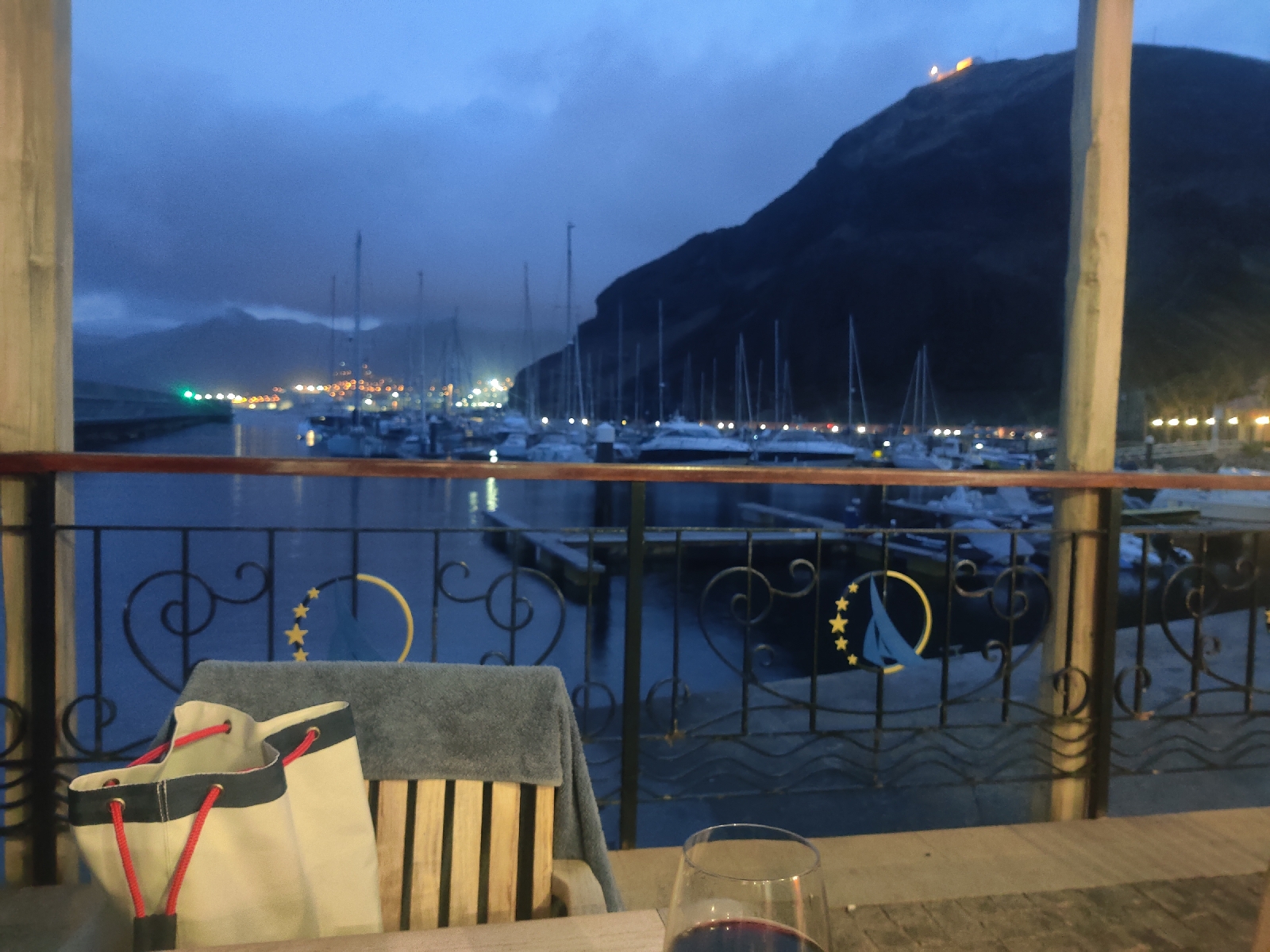
Marina do Lorde at nightfall

This was just a day sail.

After a quick breakfast we hoisted the dinghy up and stowed it fully inflated on the foredeck, got the anchor up and headed for Marina do Lorde on the eastern end of Madeira. Our main reason for heading there was to undertake what is billed as a dramatic walk out on the spiny penninsula sticking out into the Atlantic Ocean. 

We had a light north easterly breeze and so had a very pleasant if rather slow sail there making an average of about 3 knots. One other boat left the anchorage after us and took a more southerly track. I assumed they were bound for Ilhas Desertas but when we arrived, the Swiss boat, Migaloo as it turned out had come here too. 

The major event of the passage for me was being trailed by a pod of small whales for about 10 minutes. They were very similar to pilot whales but a bit bigger and were a grey/brown colour unlike the pitch black of the pilot whale. They only stayed around for about 5 minutes. Before they left the largest of the pod swam up right alongside our quarter and was almost rubbing alongside the boat. Thankfully they did not indulge in any overly inquisitive activities unlike their Orca cousins. Unfortunately I didn't get any photos!

When we arrived at around 1900, we moored in between Niord and Migaloo who had both sailed there from Porto Santo. Migaloo's crew applauded our patience by sailing all the way. They got fed up with the slow progress and motored the second half of the trip.

Out and about in Porto Santo featuring man eating fish

Here's the long delayed summary of our time in Porto Santo..

Porto Santo is the smaller of the two main islands in the Archipelego of Madeira; Madeira itself being the largest island in the group. There are a few smaller ones about five miles to the south east of Madeira, collectively the Ilhas Desertas - no prizes for translating the name! It is possible to visit the  larger of the that group - Grand Desertas, and indeed Tony and I did so in Arctic Smoke in 2015 and if you want to know more you can read my blog of that trip Adventures of Arctic Smoke navigate to May 2015;using the links in the side bar.

Porto Santo is extremely arid in contrast to Madeira's mostly lush landscape, except as you will see in my future post of our brief stay there this time, on the extreme north east of the island. Porto Santo's most striking feature is though it's long yellow sandy beach which runs down almost the entire length of its south eastern coast. This to is in stark contrast to Madeira which only has scraps of black volcanic sand on its rugged coast. As a consequence it's a favourite place for those from the main island to visit - a ferry plies back and forth twice a day between the two islands which are about 40 miles apart.

When Tony and I visited in 2015 - see the above link it was very early in the season - only May in fact - we had, perhaps a little foolishly, crossed Biscay in April in bighting south westerly winds with Arctic Smoke"s self steering still not operational! On arriving at Porto Santo we found it almost completely deserted - we were the only visiting boat in the Marina. 

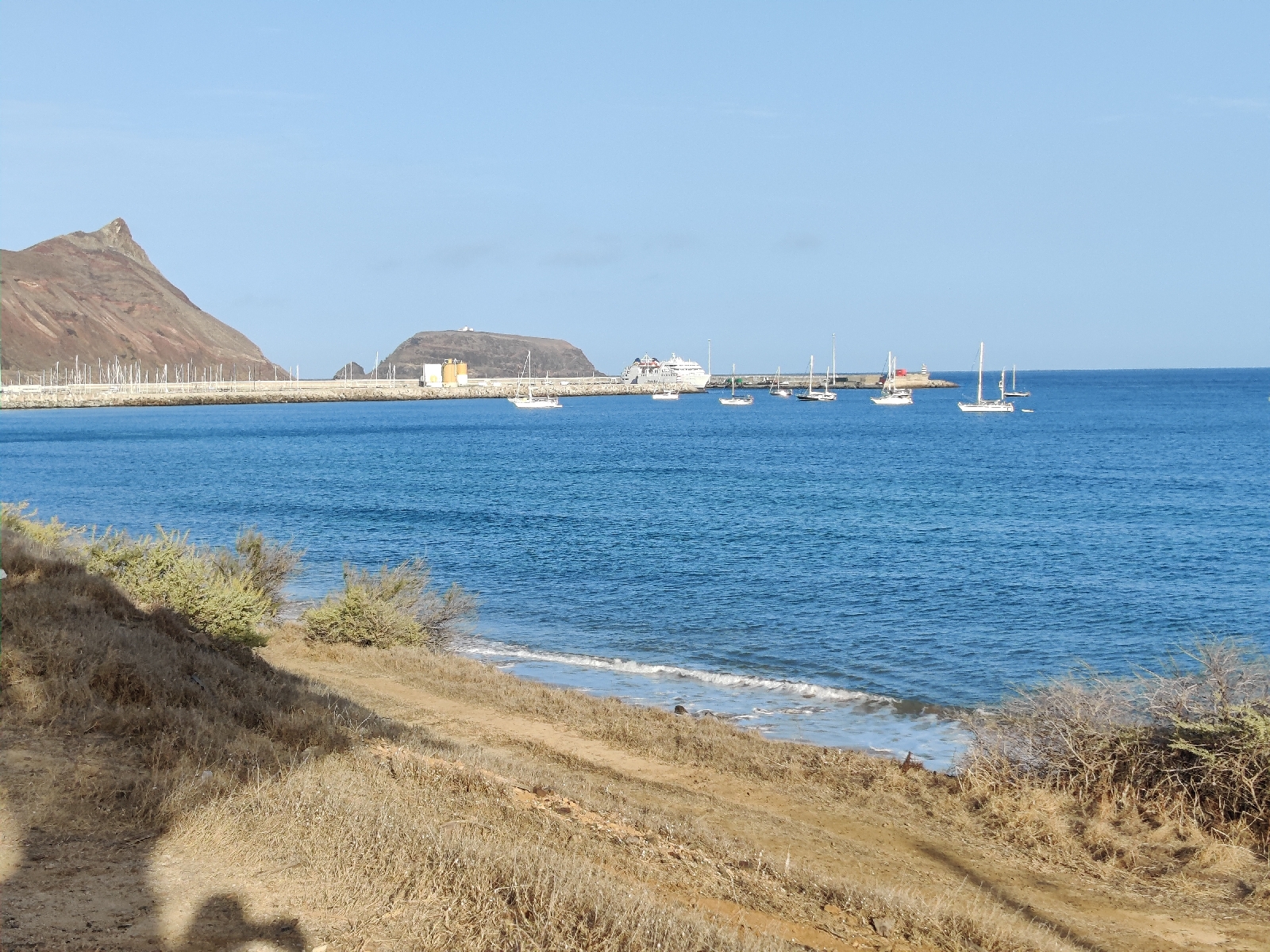
Back to the present...This time it was a complete contrast. The marina was full and we had to anchor in the bay outside which was actually most pleasant and much cheaper - for 6 euros a night we had access to the free showers and free laundry. Mind you we ony used the showers once and the laundry was always backed up so we never used it.

We spent our first two days on the boat at anchor owing to the mildly inclement weather but consoled by Tony's cake and Howard's Jack Daniels! 

On the Tuesday we finally got ashore in the afternoon and walked into town - Vila Baleira - along the beach. We had a very pleasant and cheap lunch and wandered around the charming but now quite bussling little town which was in great contrast to the quiet streets Tony and I meandered around in 2015.

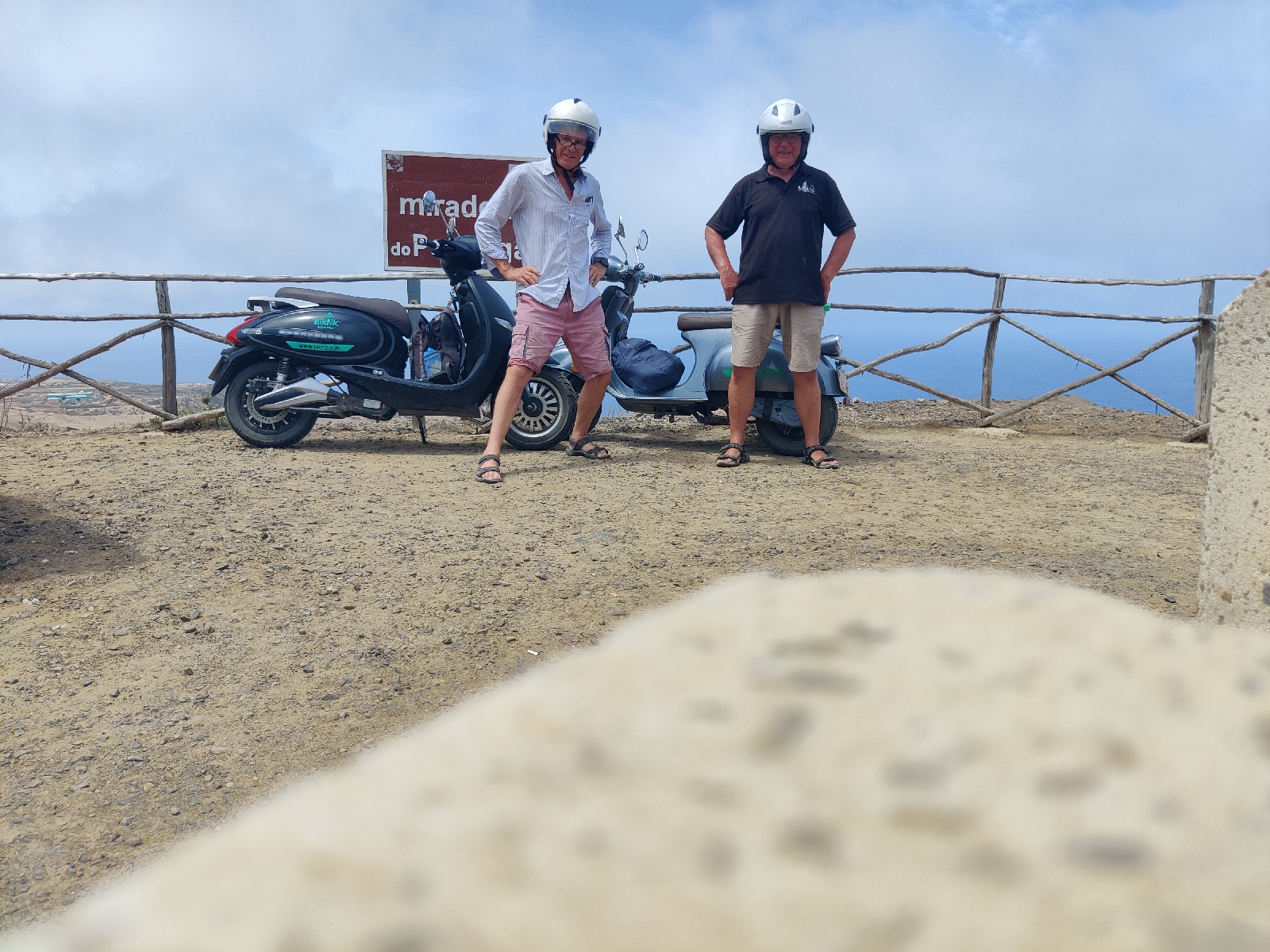
Deciding it would be nice to explore the island we hired two electric scooters for the following day, at the very reasonable rate of 20 euros each. 

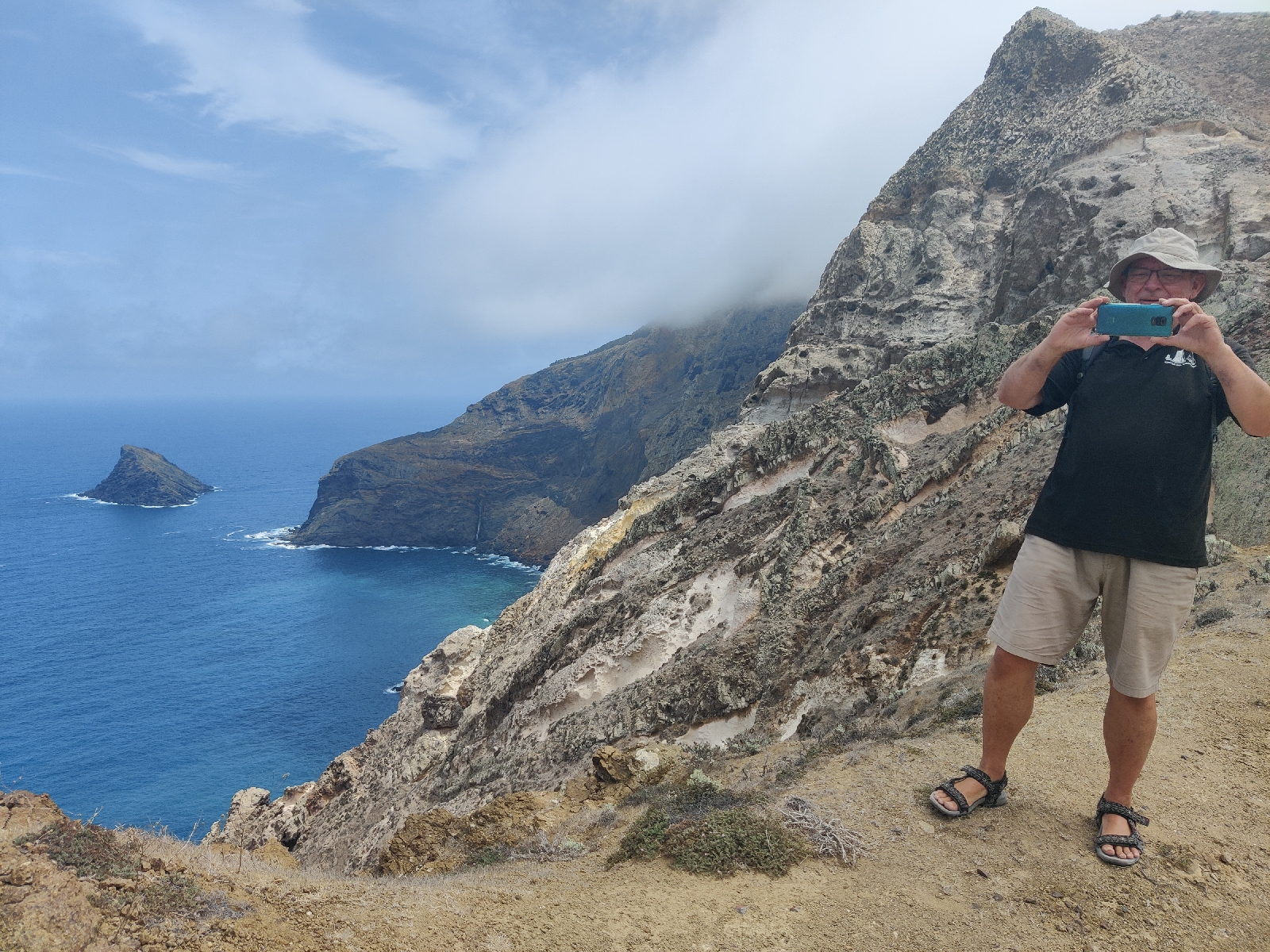
And so Wednesday saw us tour the island on two surprisingly nippy electric scooters...
Stopped for lunch at an excellent but reasonably priced meal at the family run (3-4 generations) Torres restaurant at Camacha on the north side of the island.


The last section of our tour was the south end where a number of low rise hotels have been established fairly sensitively.
Afterwards we walked back to the marina and had another good value dinner at the marina cafe

Thursday was supposed to be a laundry and jobs day but the laundry was backed up and not many jobs got done. I did however manage to scrub of the seaweed beard that had taken hold around the water line. I did this from the dinghy and in the process was attacked by a fish! Some sort of snapper. Only about  6 inches long. The little chap had clearly decided that Bonny's bottom was his own private property and wasn't going to tolerate any intruders on his patch, so as my hand went in the water to do the scrubbing, the little bugger repeatedly tried to take bites out of the back of it. Repeated slamming of the water above him with my scrubbing brush failed to deter him for more than a second or two before he was back for more. In the end I had to resort to wearing a thick rubber glove to protect my hand. Perhaps the Orca's resistance movement has started to spread to the fish population too. Imagine Oceans full of creatures intent on wreaking revenge on mankind!!

After picking Mick up from his failed laundry mission (honestly you just can't get the staff these days) we stopped off and had a chat with single hander Rob from the Walton Backwaters just up the Essex coast from the Medway, on board his Seacracker of around 10 Metres and as ancient as Bonny, if not more so, anchored just outside the harbour breakwater.

Rob's an amazing character with half a dozen Atlantic circuits under his belt including his first many years ago in a home built 22 foot boat which was wrecked in the Carribean during a hurricane! He gave us lots of tips about places to visit and avoid in the Carribean including in Barbados which we had earmarked as our likely first island. So if we get there in time for Christmas we now know the best place to visit for Christmas lunch - the Lagoon Resort at Port St Charles!

Rob had intended to start his latest trip last year but abandoned it after getting to Falmouth due to reports of Orcas misbehaving in the Wester Approaches!

I cooked a Pork Belly dinner on board that evening which was enjoyed by all the crew.

Not sure what happended to Friday but on Saturday we sailed to Quinta do Lorde, Madeira, just a day's sail away.

Tuesday, 29 August 2023

Madeira to Las Palmas, Gran Canaria and Lolo's demise

Madeira recedes in the distance.

I only started righting this on Monday morning with Las Palmas a mere 20 miles away and only got as far as "shortly after exiting...." 4 paras below before we had to start 'doing things' in preparation for our approach to Las Palmas and so the rest was typed after our arrival. 

We had made good time but I had not slept well on Saturday and it was only after a reasonable 5 hours or so last night topped up by another couple of hours thgis morning that I had the energy to make a start. I still need to write up our stays in Porto Santo and Madeira, but they will have to wait until we are hopefully settled into Las Palmas.

Having at one point talkd a little over enthusiasticly about departing at 0600, we rather more realisticly set 1000 on Saturday 26th July as our departure time. We knew we were in for something of a lumpy ride with 25 k NE winds and 3-4 metre waves forecasted but it was either that or wait 3-4 days for things to calm down. A delay of just a day would actually make matters worse. The sooner we got out on Saturday the less time we would spend in lumpy conditions. We therefore agreed to get up at 0730 and prepare for sea. This included delfating and stowing the constituent parts of the dinghy; a laborious and time consuming task at the best of times. Of course, 1000 arrived and we were nowhere near ready. We had just about finished the dinghy but that left all the rest of the usual pre-departure tasks to get done. Midday arrived and it looked like we were almost ready to go, except the goodbyes to our various neighbours turned into rather protracted discussions over all manner of things. They included finally saying "hello" to Gary, a fellow OCC member on a nearby pontoon, whom we had noticed but not managed to speak to until now. He's planning on crossing to the Caribbean too so there was lots to natter about. Then there was Cornelia and Co on the Swiss boat Migaloo, who were keen to chat and swap plans. They are probably going to settle for a cruise of the Canary islands. We had said goodbye to Tony and Karen and their two crew on board Niord earlier - they had made an early start to their day! 

Finally, around 1400 on what was still a very blustery day, with help from our chatty neighbours, we left the pontoon in precisely the opposite manner in which I had intended and briefed every one on. The wind shifted a little as we slid backwards out of our berth and blew the bows to port instead of starboard. Once that happens there is absolutely nothing to be done except to accept it and change tactics. So instead of leaving forwards we left backwards. Fortunately there was plenty of room and to the casual observer it probably looked like a perfectly planned and executed manouvre!

Shortly after exiting the marina we set all sail and pointed roughly south towards Gran Canaria. It was a very pleasant sunny afternoon with a fine sailing breeze but we knew it would increase over night so at dusk we tucked a couple of reefs in the main and continued on our way. 

I re-heated the remains of the pork belly dish I had cooked in Porto Santo and added the remains of the broccoli and that was our dinner, eated down below in what were still reasonably civilised conditions.

However, shortly afterwards and by the time Mick started his night watch we had 20+knots of wind from the NE and were hurtling along under a full genoa and two reefs in the main at 6 + knots. As usual on my first night at sea I got very little sleep during my 6 hours off watch. I emerged at 0230 on Sunday morning already aware that we were rocking and rolling rather more than when I had retired.

The wind got up further over the next couple of hours and Bonny was slewing about a fair bit as Lolo struggled a little with the extra weather helm the gusts created and so I took in a few rolls in the genoa and eased out the main sheet to calm thnings down. The night sky had patches of stars but was mostly cloudy. Feeling very tired I cat-knapped most of the time in the cockpit tucked up under the spray hood to avoid the occasional dollops of the Atlantic that every now and then deposited themselves over the boat.

Mick took over the Watch at 0800 and I went below for a kip. Soon afterwards though Mick shouted down that Lolo's rudder had broken off once again!

The failed weld from below.

And from the side.

As you can see, the new weld and repair by Lolo remained in place.

In the meantime the autohelm had somehow blown a fuse and so Mick was having to hand stear. I got up, retrieved the rudder, replaced the fuse and went back to bed. Of course sleep escaped me because of the tiz my head was in given recent events. There was really only one option open to us now and that was to replace the main Hydrovane parts (the drive unit,  tube, shaft and rudder)  as we had previously considered doing. It was a right pain in the bum but far better that it failed now and not half way across the Atlantic. I'll email Hydrovane as soon as we get an internet connection and start the ball rolling.

The rest of Sunday continued in much the same vein under cloudy skies with the seas gradually building and occasionally we would rise up on top of a real wopper! Still feeling tired I couldn't be bothered to do anything other than check for shipping (we saw only two ships before arrival at Las Palms) and doze. Mick was feeling out of sorts and was occasionally sick if he spent to much time below not lying down. We did though continue at a fair old lick and at this rate may well be in by Monday evening.

Sunday night was a repeat of Saturday night (although I did get a reasonable sleep) and Monday a repeat of Sunday up until about midday when the wind eased off and I unrolled the genoa to its fully size. By 1500, off the NE 'corner' of the island we had only about 10 miles to go and had to gype onto the starboard tack to head for Las Palmas. To sail in, I really needed to rig the genoa on a pole but we were rolling about so much that it didn't seem worth the agro for a couple of hours sailing and so the engine went on and we motor sailed in with two reefs still in the mainsail.

We moored up at the reception pontoon around 1630, a two hundred and ninety nautical mile passage completed in around 2 days and 2 hours, giving an average speed of 5.8 knots! Pretty good going, but of course we did have strong winds from just aft of the beam for the majority of the passage.

We sorted out the paper work and then got shown to our berth by the very helpful Marina man.

The massive marina at Las Palmas. Bonny's in there somewhere!

Bonny in her new temporary (how long) home.

Unfortunately we could not book a long term berth because of the forthcoming arrival of the ARC fleet and so the best we can do is renew every seven days until we are required to leave. This is going to complicate arrangements for meeting up with Sharon and Co here on the 12th and managing their stay, and my planned trip home with them on the 19th and the delivery of the Hydrovane parts! As things stand I have no resolution to any of these issues other than to hope we are allowed to stay for a few weeks. The anchorage here cannot be used until the 15th of September and so if we have to move before then we would have to go elsewhere. There is an anchorage at the southern end of the island at Pasito Blanco which may be a option. 

Saturday, 26 August 2023

Goodbye Madeira

Well we finally managed to leave Marina do Lorde around 1330 having planned on a 1030 departure! It always takes so much longer than I think it will to get ready!

We have a passage of around three days ahead to get to Las Palmas, Gran Canaria, where I hope to be able to park the boat up until the end of September/early October. It's not possible to book in advance and so it's possible we may have to find somewhere else to park the boat and that will take some time!

Sharon flys out to Las Palmas with Stephen and Ines and their two little ones, on the 12th September to celebrate our wedding anniversary on that day which is one reason for wanting to park the boat for a month or so. 

The other is I am fast running out of my 90 schengen days (which started counting down on 31st July when we officially entered Spain by virtue of getting our passports stamped) and am therefore hoping to leave the boat and fly home with Sharon and Co and spend 10 days or possibly longer at home/catching up with friends and family. That way I can 'bank' those shengen days and so delay our departure from the Canaries for the Cape Verde. An added complication is that Mick flys back to the UK on the 6th September and won't return until the 28th October or possibly later if he doesn't get his US visa in time!
🤞🤞🤞
I'll write up our short spell on Madeira whilst on passage.