Monday, 8 July 2024

Shelter Cove to Marie Joseph Harbour and Sherbrooke Village

The bloody anchor windless played up again as prepared to leave at around 0900 on Friday 5th July. It worked ok for a few minutes and then wouldn't stop! The contacts in the solenoid were looking rather emasculated! I managed to get to the isolator switch without mishap this time and got the last few feet up by hand. Looks like weighing anchor will have to be by hand until I can get and fit a new solenoid control box. I subsequently ordered a new one to be delivered to St Peter's Marina at Bras D'or Lake in Cape Breton on around the 16th July.

I said good bye to the crews of the other boats and headed east. Zen Again would follow me out a little later. Indeed after about three hours they eased past on their way to St Peter's, Cape Breton, which they intended to make in one leg. 

Mike returned the favour with a photo of Bonny...


My planned destination on leaving, was Liscomb, about 35 miles to the east, but the wind - 'billed' as a moderate south westerly never lived up to expectations and after a few hours of sailing at 2-3 knots, my planned ETA there of around 1800 was looking more like 2200 and so I studied the Pilot (The Crusing Club of America's excellent Guide to Nova Scotia) for a nearer alternative.

The rather wonderfully named "Ecum Secum" was one, but even at 3 knots I would be able to cover more ground to the east and so chose Hapes Point in Marie Joseph Harbour just a little further on.

I dropped the anchor in the gathering mist at around 1900. It's another delightful piece of wilderness although I did notice a church spire peeking through the pine trees about a mile up the point from the anchorage in the 'notch' joining the two parts of the Point together.

I made a mince one pot curry for dinner and caught up on the UK election results before retiring to bed.

Saturday arrived, chilly with drizzle and plenty of fog and so lay in bed until around 1000. I checked the forecast then which threatened rain all day and so given the possibility of spending the day confined to the boat I lit the heater and was soon warm and cozy.

On poking my nose outside after a very late breakfast, the rain had stopped and so despite the fog I decided to launch the dinghy and go exploring. I left the heater on though having decided the luxury of returning to a warm boat was well worth the cost of the fuel and besides which, not needing to re-light it on my return, would preserve my dwindling stock of meths.

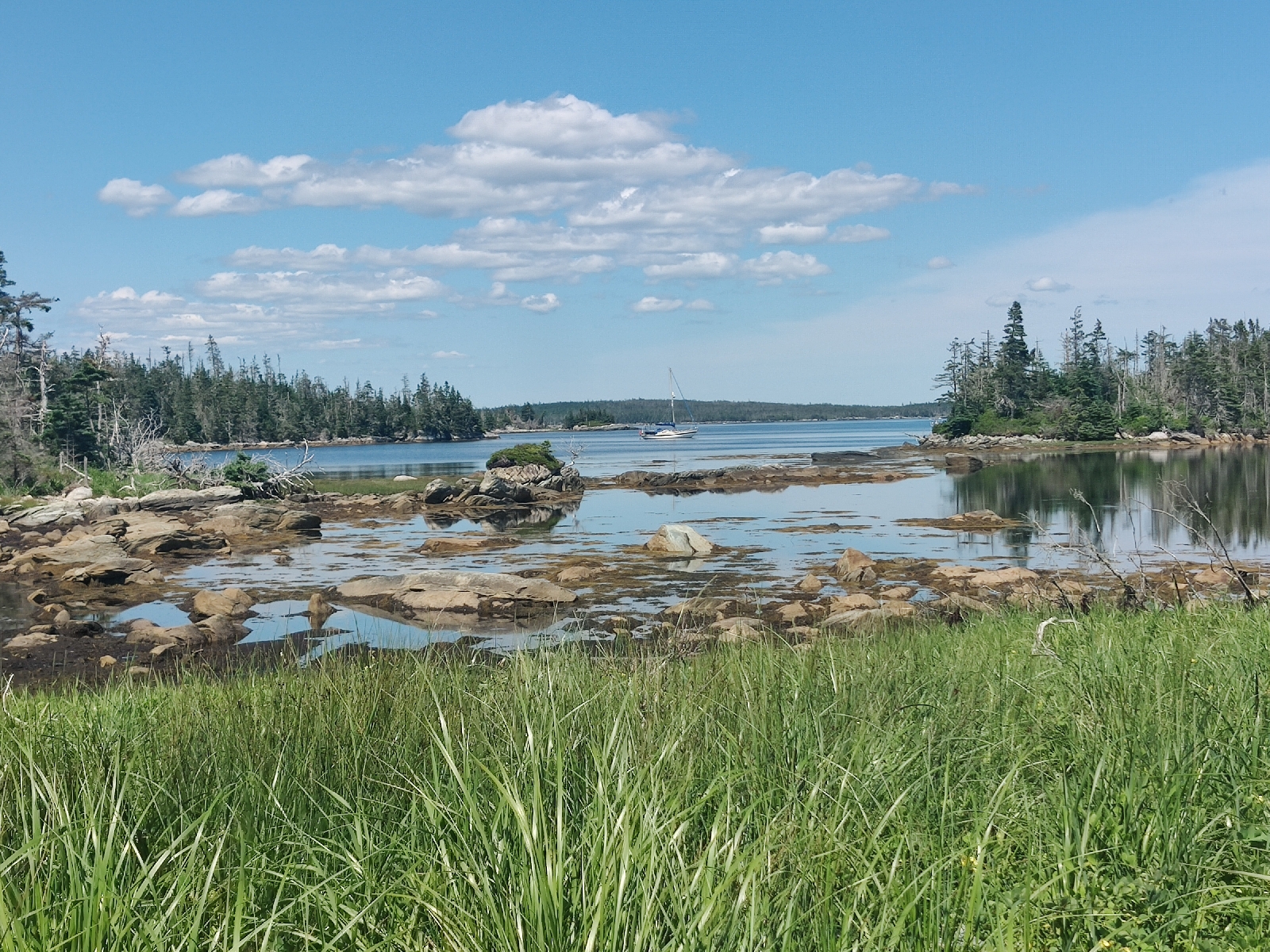
Ashore, I found a similar landscape and environment to Shelter Cove, but with some interesting differences too. 

I landed near 'the notch' between the two parts of 'the point'. They appeared to be joined by a miniature and rocky version of Chesil Beach that joins Portland Bill to the mainland in Dorset in the UK. 
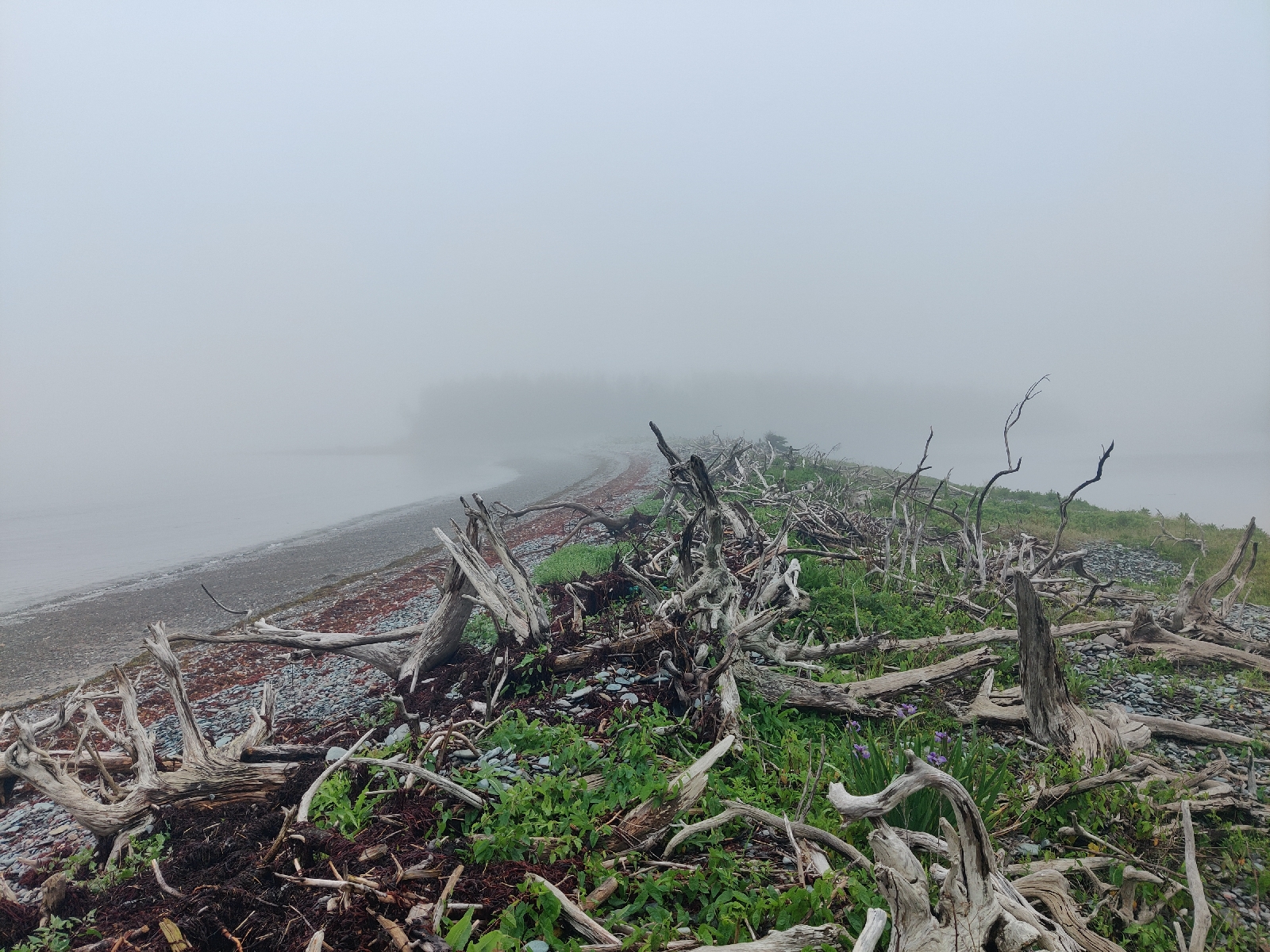

On the east side of the notch where I had landed, a causeway/dam had been constructed (a long time ago).
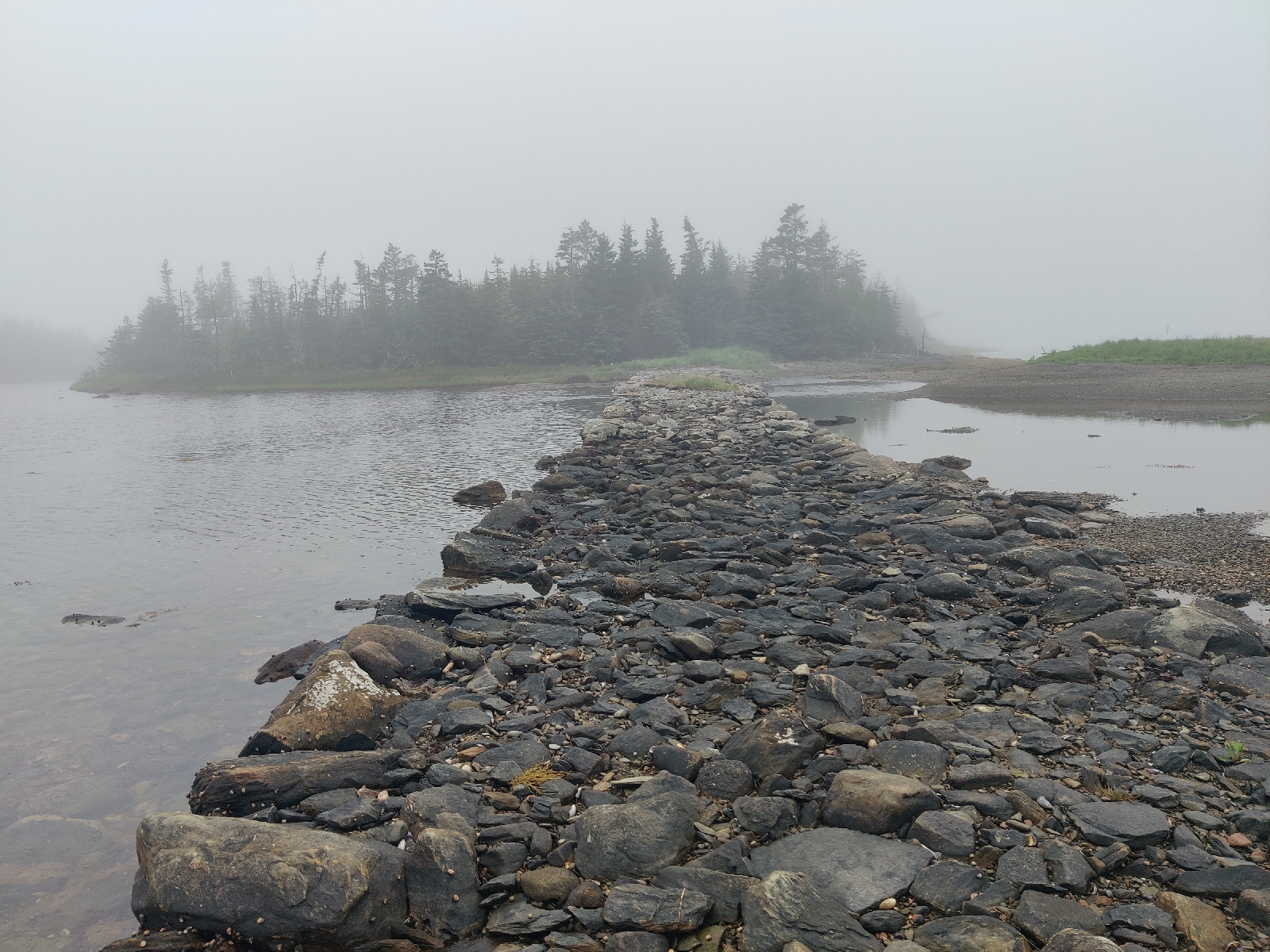

It had a gap in it, whether it was intended or not I could tell, but the causeway had the effect of creating a saltwater pond that filled and emptied with the rise and fall of the tide. 

As far as I could make out there was no sort of settlement on the 'island' section of the point and so the purpose of the causeway was a bit of a puzzle, especially as both ends of it terminated up agsinst dense woodland, which as in Shelter Cove comprised a mixture of dead, dying and seemingly healthy (mostly) fir trees.

There wasn't much wildlife around apart from some gulls and a few pairs of elegant diving birds. They moved so swiftly that it was difficult to identify specific features, other than they were mostly white with a narrow pointed bill and a forked tail. I'll have to consult my book of oceanic birds but it's not easy to use. I wish someone would write one that lists and describes the birds that one is likely to come across by region. Perhaps someone has, but I've not found it. Actually a quick search on the internet suggests it may have been an Arctic Tern, I just don't remember noticing a black head.

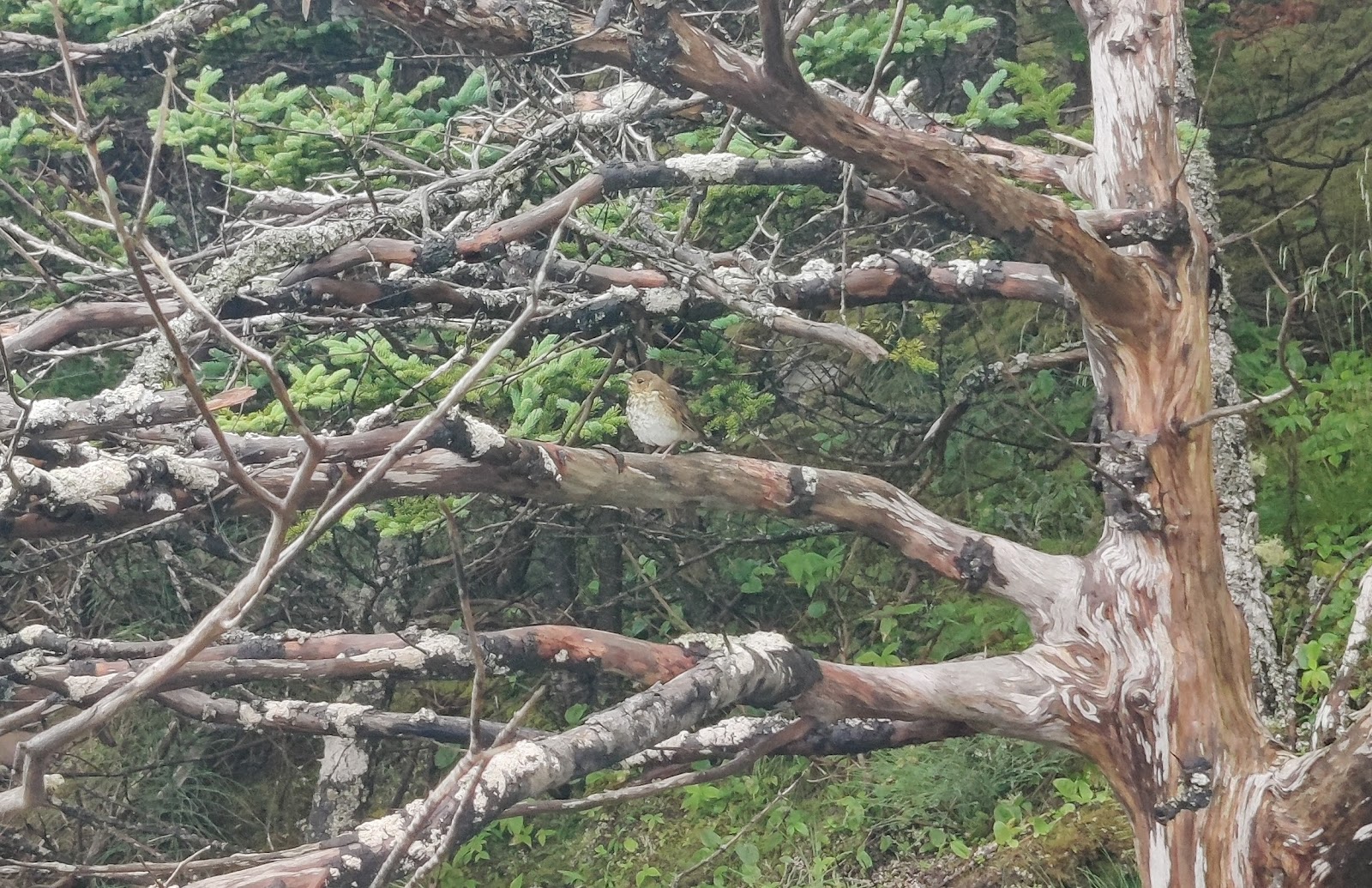
I also managed to capture a shot of what looked to me like a large plump sparrow. Yet again I'm not sure of its identification - the same source suggests perhaps a 'Fox Sparrow' but that should be much redder!
The coast here is clearly being eroded to a significant degree....

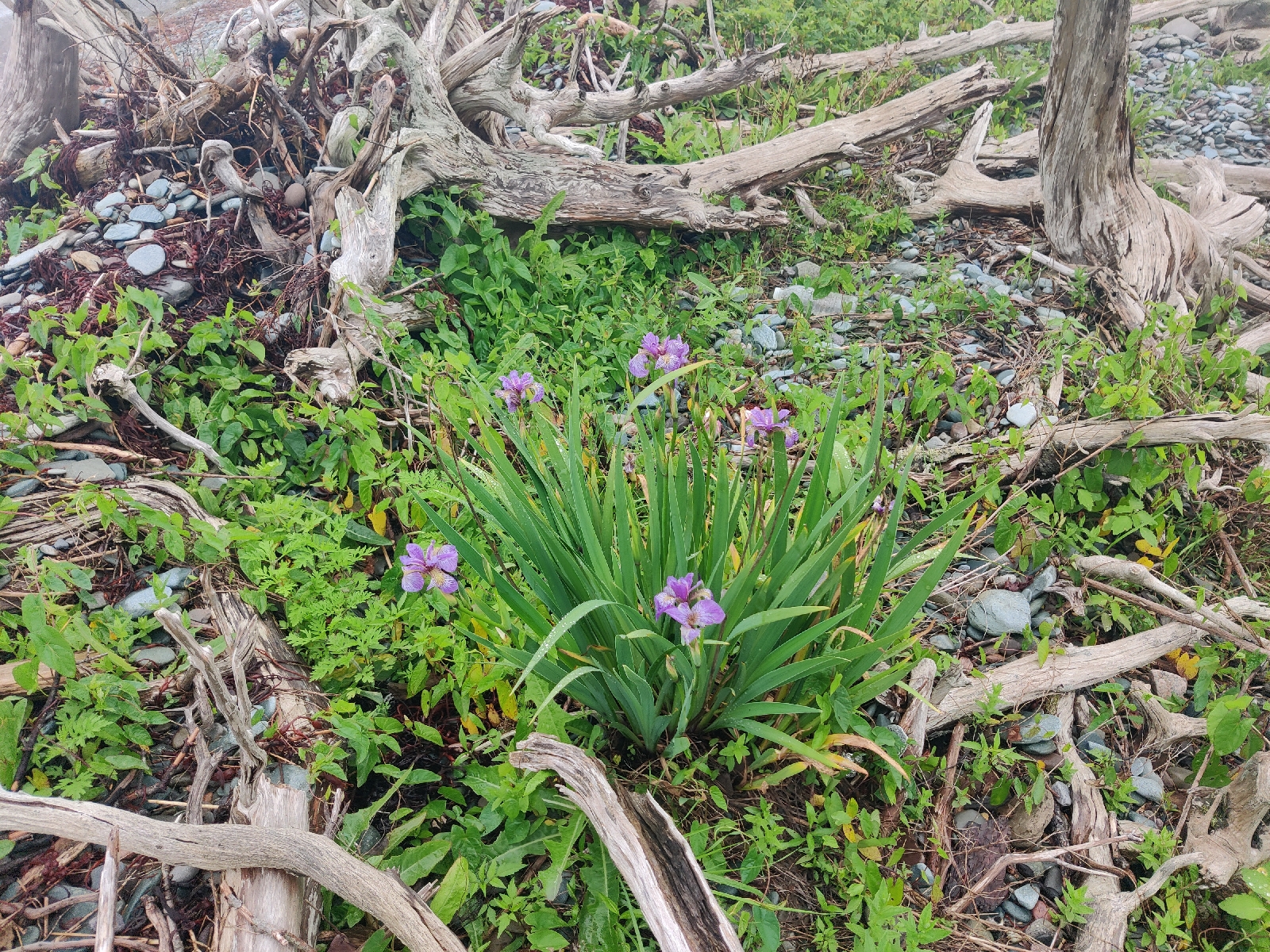
However, it's impressive that even in such a harsh salty environment wild flowers seem to be doing very well...
I left around midday on Sunday bound for Sherbrooke village near the head of the St Mary River about 20 miles to the east. The forecast was for early morning fog to clear by 0900 but come midday, departure time in order to arrive at the mouth of the river at low tide, fairly thick fog persisted. So I was to have my first experience of sailing in the Nova Scotia fog. The first few miles of the route went through a fairly rocky area and so whilst I was a bit anxious it would also provide useful experience of using the radar.

So I weighed anchor (a combination of by hand and the windless by operating the cut-off switch by the chart table) just after midday and headed east through the rocks, paying close attention to the chart plotter and the radar. After a while I was able to reconcile the radar images with the chart plotter. I didn't really need the radar for navigation, but it was good to become more familiar with it. I was certainly very glad I had the chart plotter because some of the rocks didn't appear out of the fog until we were almost on top of them!

Despite the fog we had a good sailing breeze (as is often the case in these parts) and made good progress. Indeed it wasn't long before I realised we were going rather faster than I had planned for and would arrive off the river while the ebb was still running. I tried to slow down by rolling in most of the genoa and by spilling the wind from the mainsail but Bonny took little notice - she probably slowed from 5.5 to 4.5 knots!

At about the half way mark I spotted what looked like 'a target' on the radar. A small echo picture where there wasn't supposed to be a rock. The radar has the facility to 'lock on' to the target and track it and provide information about it such as bearing, course and speed (if it's moving) and sure enough it was a vessel underway and not transmitting an AIS signal. This is where radar is so invaluable. You have to be more alert to potential targets, because unlike AIS, which only shows active transmissions, radar shows a lot more including rocks and vessels that aren't transmitting anything, but it means you can identify potential collisions even when you can't see the other vessel by eye or on AIS.

For a few minutes this one looked like it may be a problem, but thankfully it changed course and left us in peace.

We arrived off the river mouth in what was by then, bright and hot sunshine, at what I thought was an hour before low water and so 'hove to' for an hour before heading up the river. I was surprised to see that even then there was what appeared to be quite an ebb tide still running. Perhaps it was because the virtual tide gauge I was using was at the head of the navigable river!? Anyway I figured it couldn't be long before the flood was making and so carried on. Very soon the wind died and we had to continue under engine. About half way up the 9 mile stretch we ran aground despite being in a charted minimum depth of 2 metres. Also, strangely the tide still seemed to be ebbing. Of course, grounding on mud is second nature for a Medway sailor and provided the perfect excuse for a cup of tea!

After about an hour we lifted off the mud and continued on our way up the narrow wooded river. I spotted an otter swimming down river which was very pleasing.

I dropped the hook off the dinghy dock..

... just down river from historic Sherbrooke village in anticipation of an interesting outing the following day (the old village is essentially a museum comprising 18/19th Century 'working' trades and shops such as a blacksmith, pottery, post office, Taylors etc).

It was a bit strange to be totally surrounded by trees and marshland but of course we were 9 miles up the river.

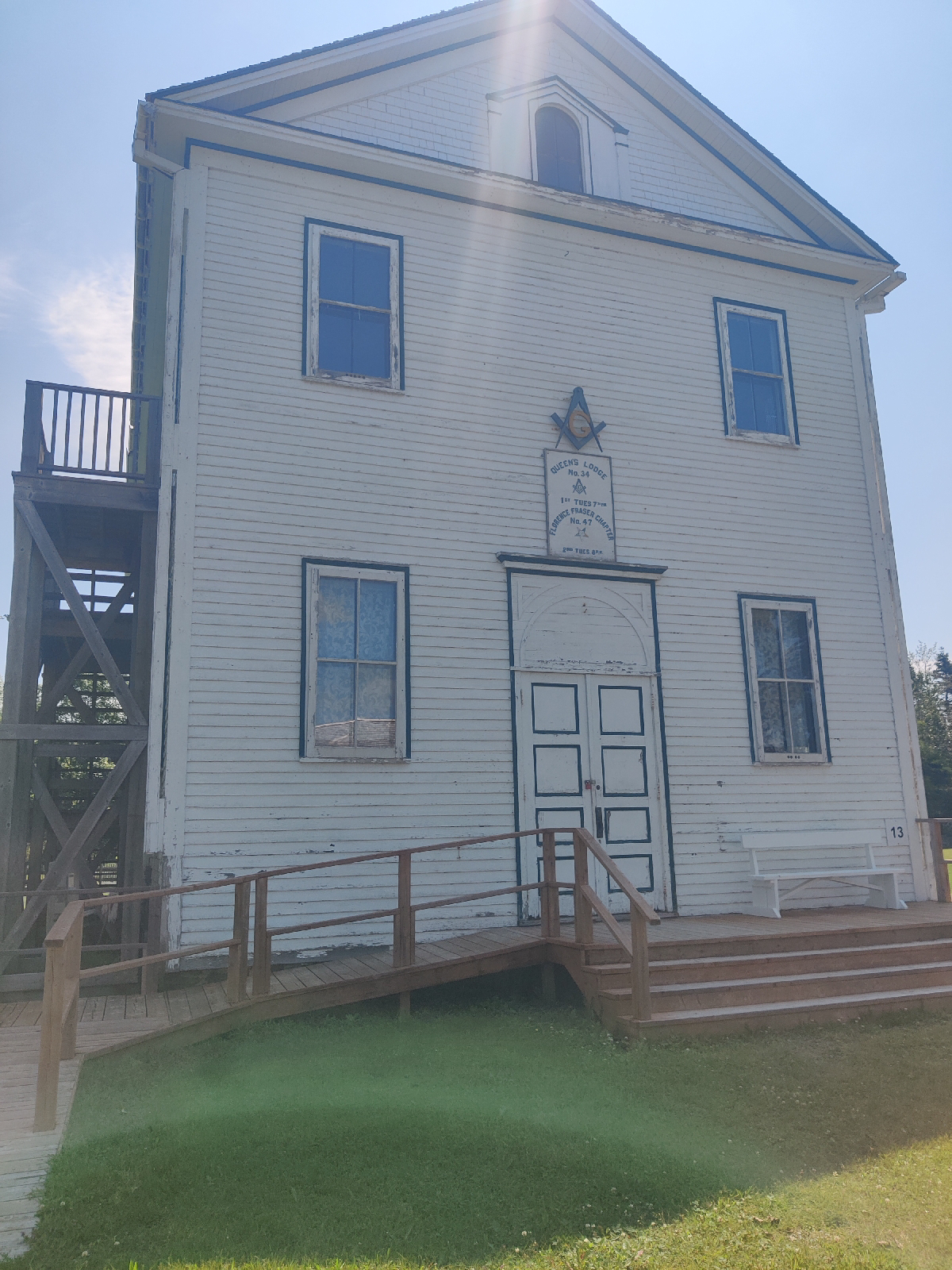
I got ashore at about 1100 and walked to the village. Sure enough there were lots of old traditional buildings similar to those in Shelburne and Lunenberg, but everything was deserted - not a soul in sight, everything was locked up!

After wandering around and admiring the seemingly completely empty buildings, I walked on towards the present day Sherbrooke where I needed to do some shopping. I hoped I'd be able to visit the Whale Museum on the way, but that was closed too.

I went into the village fuel station/shop/cafe and had a coffee and muffin. There I learnt that the old village was closed on Mondays and Tuesdays!!!

Whilst drinking my coffee I overheard a couple of guys talking about fishing and the river and one asked the other if one could get a boat all the way up the river. "Oh yes, in fact a yacht's just come in yesterday". Que me. We got chatting for quite a while. As I went to leave one of them asked if he could come down and look at the boat. He used to sail years ago and was hoping to buy another boat soon.

So I climbed in his truck (of course) and we headed back to Bonny. On the way he explained that Old Sherbrooke is not entirely authentic; rather similar to Stonehenge, it's been partly re-constructed! I must admit I was surprised, at how perfect everything seemed to be.

The dinghy dock seems to be a favourite spot for the local youngsters - a group of them have been there all day swimming in the river's black - peat stained I think - water. It was surprisingly warm, but after the crystal clear waters of the Carribbean and Bermuda, I wasn't tempted!

Tomorrow I'll be heading back down the river and eastwards once more.

Wednesday, 3 July 2024

Shelter Cove

I promised you an amazing coincidence, well here it is. I dragged myself from my slumbers on Sunday morning, looked out of the window, into what was now a very damp and misty Shelter Cove (much more so than in the photo above), switched on Starlink and went back to bed. After a while I checked my emails and...

"Hi Tom,
Greetings from your new neighbour in Shelter Cove. Looked you up on the OCC web site.

I see you’re from Hoo on the Medway. I used to sail from the Hoo Ness YC with my uncle, many years ago. Twould be good to get together sometime.

How long do you expect to stay in Shelter Cove? Are you heading east (as we are)?
Cheers,
Mike & Nic."

Now, as you can probably tell, Shelter Cove is a little off the beaten track, and this early in the boating season (yes I know it's July, but this side of the Gulf Stream things are a bit slow to get going) there aren't many boats running up it! 

So, I was pretty surprised to find I even had a neighbour; even more surprised that he had heard of Hoo, let alone sailed from there, and to cap it all, Mike and Nic had left Australia in 2015 and managed to arrive in Shelter Cove within a few hours of Bonny's arrival!

By the way, just to give you an idea of how deep into the year, the tentacles of a Nova Scotia winter can penetrate, Sunday evening got so cold that I finally undertook the long overdue service of the Diesel Cabin Heater and despite the persistent drizzle, emptied the cavernous cockpit locker, removed the screwed down floor board and reclaimed the chimney that had honr into storage in May 2023!

By the time I had finished the service and had amassed a load of diesel sodden kitchen towel, I had warmed myself up sufficiently to no longer need the heater!

Monday morning was just as chilly and wet, but I avoided the cold of the early morning by simply staying in bed late and then once the rain stopped, escaped over to "Zen Again" (whose heater was working) for coffee. By then, the very hazy sun that penetrated the mist had, surprisingly, started to warm things up. The rain returned as soon as I got in the dinghy, but aboard Zen Again all was cozy. Indeed within a few minutes so much so that they switched their heater off and I remained in shirt sleaves.

By that evening however, winter had returned and I lit the heater. There's something extremely pleasant about being warm, dry and cozy on a boat whilst outside is cold and wet. The morning was the same and justified using another dose of my meagre supply of methylated spirits (I had completely forgotten that I needed the stuff) to light the stove once again. Luxury! 

Within a couple of hours, summer was in full swing, it was 25°C - no need for heater.

That's still the temperature now, as I write this on a very lazy Wednesday morning in the cockpit. Time to take off my long-johns! 

Yesterday we had so much sun that I turned the water heater back on and there's currently a full tank waiting for me to have a shower, once I've finished writing this. I also recommissioned the water maker. Despite being inshore, the water here is so clean that I'm sure it will be fine.

After visiting Zen Again, I decided the visibility was good enough to warrant a trip ashore to explore.

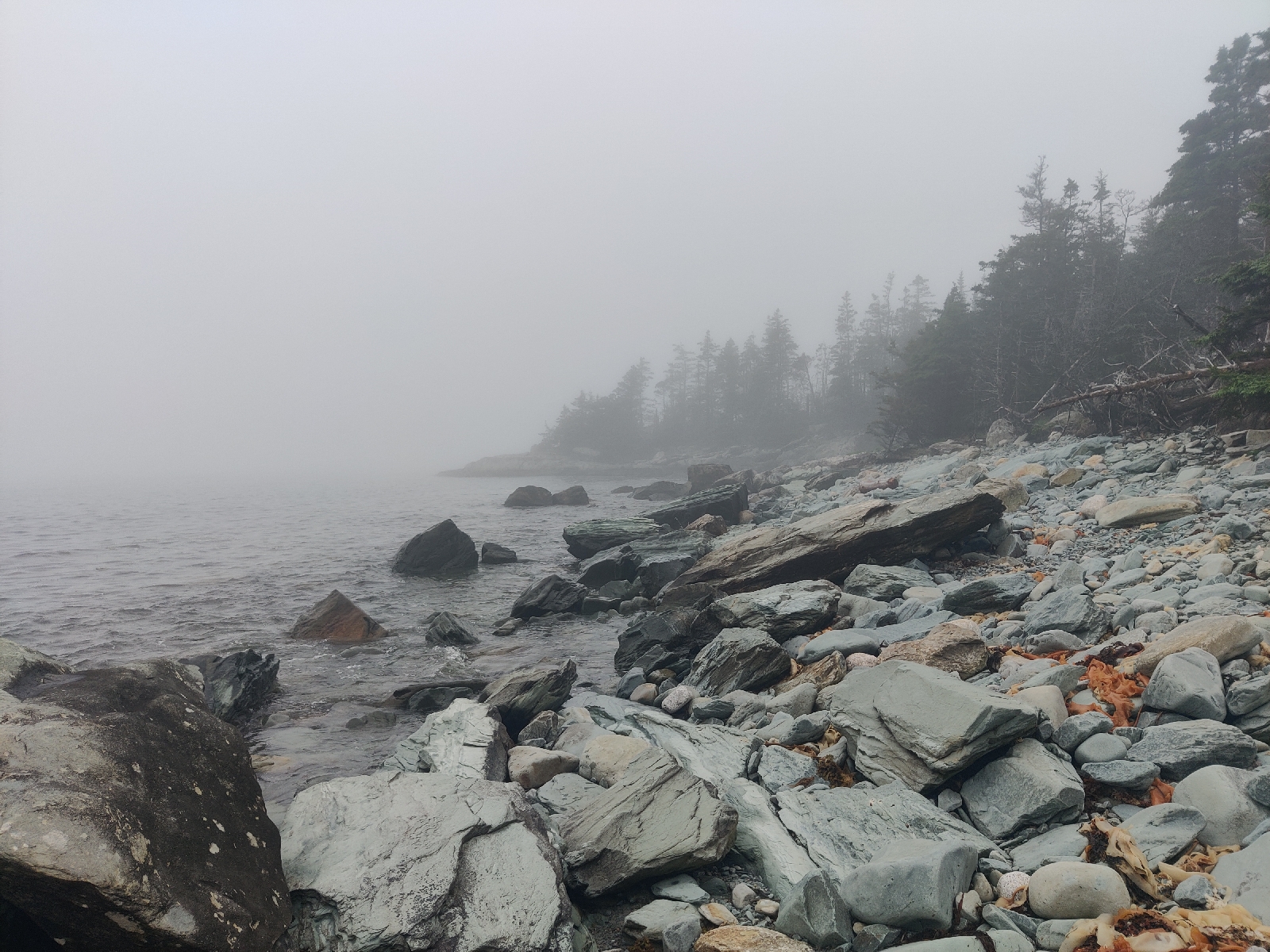
I was glad I went, because the ever changing density of fog and the changing layers of mist that hover over the cove on such days, make for mysterious and magical land and sea scapes and for the first time I felt I had found Nova Scotia's wilderness!

Don't get me wrong though - sunny days here are gorgeous - the warm sunshine is so much more enjoyable than the blistering humid heat of the Carribbean. 

I flicker of activity just caught my peripheral vision and I got the glasses out to watch a family of diving birds enjoying the sunshine on the other side of the cove. Heads would pop up, then the rest of the bird before they scamperd a few metres across the mirror surface of the water and dive again. Enchanting.

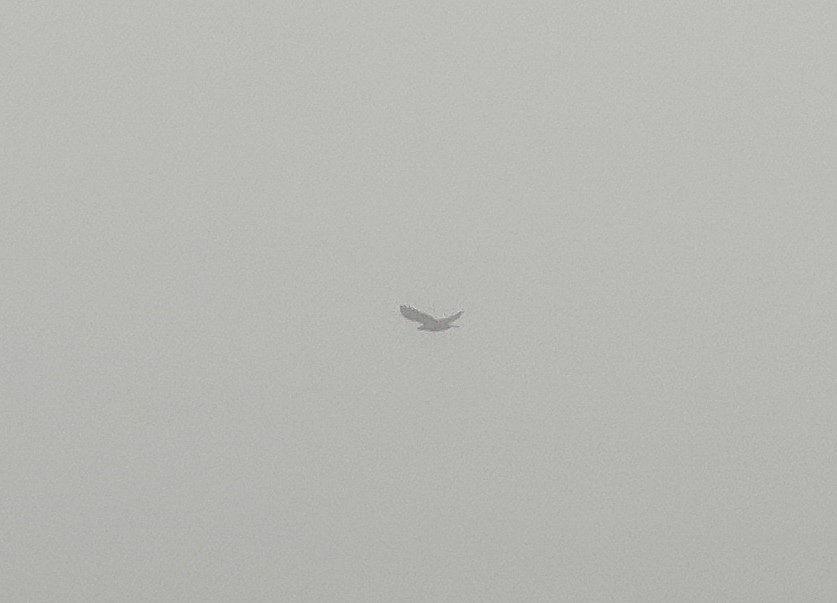
Talking of enchanting; yesterday as I rowed around the cove and then explored on shore, I saw two eagles, a sea otter (or perhaps a seal further off) and most excitingly traces of bear! 

At the time I thought one of the eagles was an Osprey, but Mike and Nic assured me it was a bald headed eagle.

This one, I think, was not the bald head!

The day (Monday) was so quiet and peaceful in the mist, that it seemed sacrilegious to scar it with the sound of an outboard motor, so I rowed around the cove and to the shore. Despite it being a windless day, this was not quite the risk free enterprise you might think. Both the two piece oars had lost their silly little connecting clips and were only held together by bits of gaffer tape (an absolutely indispensable component of a boat's tool kit as Murray, I'm sure, will agree).
By luck I had timed my exploration to coincide with the last two hours of a rising tide and was able to leave the dinghy in the salt marsh tied to a tree in the knowledge it would still be afloat a couple of hours later. 

I had landed close to the two "beautiful back to back beaches" mentioned in the Pilot. 


My first find was an axe embedded in piece of driftwood. After a lengthy debate with myself about whether the owner may seek to retrieve it and whether it was even left where I found it, I decided to 'rescue it'. As Burglar Bill would have said "... that's a nice axe, I'll have that..."!

I exploring the beach and its rocks, crossed the narrow istmus to the other beach and then took a short trail to my right through the rather strange woods - dying and dead firs amidst healthy mature and young trees. Despite the very salty conditions there was an abundance of wild flowers....

Some scenes reminded me of the bluebells in Norfolk's woodlands ...

I clambered round the headland back around the fascinating and ancient horizontal rock formations that ringed the peninsula until I returned to the beginning of the trail but from the opposite direction.

I then walked the full length of the second beach, found a camp fire clearing in the woods....

and a purpose built latrine...

... and then finally returned to the dinghy - still afloat and rowed back the boat in the gathering gloom.

On Tuesday morning - a gloriously summer day - Mike and Nic came over for coffee and in the afternoon we went exploring the same territory once again, but this time without the fog. 

It was a bit like exploring the two characters of Dr Jeckle and Mr Hyde. Both deep and intriguing, one mysterious and the other charming.

Afterwards it was back to Bonny for beer in the cockpit in the sunshine. This afternoon we'll go off exploring somewhere else by dinghy.

The wind is due to return on Friday, when both Bonny and Zen Again will continue eastwards.


Tuesday, 2 July 2024

To Shelter Cove - twice!

Bonny at anchor in Shelter Cove

Despite the previous night's Jolly, I was up at 7 to rejoin the fight with the windless. Mick had reminded me that the symptoms were similar to a previous occasion and that we 'fixed' it by cleaning the contacts in the solenoid control box. He also pointed out, not for the first time, that aggressive use of the windless would hasten the final demise of the contacts. Of course, what I should have sussed when it played up the first time, was that it was an early warning of the thing wearing out and bought a new one, but I didn't!

Hopefully, I wouldn't discover that the contacts were now completely burnt out . This time the job was made particularly unpleasant by the fact the anchor chain locker, where the solenoid is located, was now full of anchor chain covered in the Armdale Arm's goey, foul smelling mud!

Fortunately I had a full hot water tank (all of 5 litres) and so could have a shower afterwards. Laundry though would have to wait.

Anyway I got the control box out and cleaned up what was left of the contacts and after two attempts at reassembling and reinstalling it, it seemed to function OK. Mind you, that's what I concluded after cleaning and re-installing the deck switch.

I must; a) buy a new one ASAP and b) test it again BEFORE I need to use it in anger.

Zora and Linnea left for Cape Breton whilst I was in the middle of all that and so I took a break and waved them of. I do hope their passage to Greenland goes well and without major mishap and maybe I'll meet up with Rhys again next year. Hopefully, Bonny will visit Ireland on her way home next summer.

By the time I had finished the job, tidied up and had some breakfast it was 1030. There was still time to make the highly recommended Shelter Cove, some 35 miles to the north east and so I decided to leave. I phoned John to say my goodbyes and hastily plotted a route on Navionics on my phone and also on OpenCpn at the chart table. 

I then motored down Jeddore Harbour which took a couple of hours. With a light to moderate south west wind we then had a pleasant if slow sail up the rocky coast to Shelter Cove. Once again, I escaped the fog even though it was quite overcast.

The entry into the cove would be directly into the wind and so when a quarter of a mile off, taking care not to get close to the many outlying rocks I got the sails down and motored towards the entrance.

Something was wrong though! The detailed locations of rocks and land marks mentioned in the pilot didn't quite match up with what I was looking at. And where were those two beautiful back to back beaches given such prominence in the pilot?

Suddenly I realised why they were nowhere to be seen. This wasn't Shelter Cove but somewhere else entirely. What an absolute plonker! Despite having all the mod cons and only having to follow a pre-set route on the chart plotter, I had still managed to get lost after travelling all of 30 miles or so.

How on earth did that happen? User error of course but I was still puzzled. Luckily the weather was benign and there was still plenty of daylight left so I did a quick about turn, found a decent area of rock free water, set the engine to dead slow and went below to study the chart plotter. Sure enough, we weren't at the entrance to Shelter Cove, but to Long Creek on Wolfe Island, about 8 miles north east of Shelter Cove.

In my haste to plot the course that morning, I'd used a much to zoomed-out view to locate Shelter Cove and had chosen the broadly similar Long Creek by mistake. Having done that, I simply plotted a route to it to avoid the various rocks and shallows.

Lesson for slow witted sailors - don't rush planning a route. Fortunately, the only consequence was an unnecessary diversion. An hour and half later in the late evening light, we motored through the entrance to the real Shelter Cove.

Very beautiful (and of course sheltered) it looked too. You'll have to read the next post to find out more about this wild mysterious place and about a pretty extraordinary coincidence that took place the following day.

Sunday, 30 June 2024

To Jeddore Harbour

Friday the 28th June, the day after the OCC gathering at the Armdale YC, was departure day for Bonny, Zora (Rhys) and  and Linnea (Joshua and Emmey). We were all bound initially for Jeddore Harbour about 40 miles to the east and therefore a comfortable daylight sail. 

I got up at 0700 with the intention of leaving by 0900, but by the time I had the dinghy on deck and all the other pre-departure jobs done - including laying down the route on Navionics on my phone for use in the cockpit (I had had no luck in finding Nova Scotia charts on the now, out of production, Compact Flash Cards, required by my old, but reliable Raymarine Chartplotter mounted in the cockpit) and on OpenCPN on the Raspberry Pi.

It seems that the marine electronics industry is beset by the same malaise as the domestic appliance industry. Old, slightly clunky, reasonably simple, and highly reliable and long lasting pieces of kit, have been superseded by flashy, complicated, poorly designed and highly unreliable pieces of kit. These of course, use consumables such as data cards that are incompatible with the previous generation of products. Clearly a completely deliberate ploy to force sailors to 'upgrade' to the new generation of kit designed to fail on the expiry of the warranty, forcing the sailor to buy a replacement. And so it goes on. Bloody insane and shouldn't be allowed. 

Anyway, I can't afford a new Chartplotter and so that's why I use the far from ideal solution of Navionics on my phone when I 'need' to access a chartplotter in the cockpit.

God we've gone soft, read that again - "....need to access a chartplotter in the cockpit...." It wasn't that long ago that such gizmos simply didn't exist but we (usually) managed to get from A to B without mishap. We noted the navigational aids, if any, that had been provided and the contours of the coast, and where the rocks and shallows were and piloted our way through the passage using dead reckoning whilst taking bearings on the various features and double checking their characteristics with the information provided on the paper chart on the chart table. 

One would often be uncertain of one's exact position for a while until everything fell into place, but I don't think I ever turned up outside a destination, only to discover at the very last minute that I wasn't where I thought I was. Why did I mention that? You'll have to wait until the post after this one to find out!

My troubles started immediately on trying to raise the anchor. The fault that I thought I had sorted re-appeared and I had to go through the same palava as before to raise the anchor only this time I managed to avoid falling down the companionway steps and I remembered where the isolator switch was. It was rather comical really. I was repeatedly running back and forth the length of the boat to switch the Windless on and off. Finally it was up, without any apparent serious damage being done to the windless, although the control solenoid, which I now suspected was where the fault lay, probably took an additional hammering.

I briefly considered abandoning the trip again, but the weather for the day looked perfect and bad weather was on the way. If I didn't go now, I'd be stuck here for another few days. My stay at Armdale and the visits to Halifax had been most enjoyable, but I was yearning to find wild Canada. Besides which, John and his lovely wife Heathet were expecting me for dinner and that would be followed by another session with them and the crews of Zora and Linnea! 

So, thrusting concerns about how on earth I would raise the anchor next time, to one side, Bonny followed Zora down the North West Arm.

Initially I motored after Zora whilst I tried to rinse the foul smelling Armdale mud off the anchor (I swear that the early settlers not only took the names of English towns with them, but that they also dredged the Medway and took its mud with them too).

Once the foredeck was reasonably clean I unfurled the genoa, switched the engine off and with the wind behind us, shadowed Zora down 'the Arm' and into the main Halifax waterway. Once out of the harbour our turn eastwards put the wind on the beam and so the mainsail went up too.

It was a delightful, if occasionally chilly day, with the wind varying from light to fresh and the sun playing hide and seek with the clouds. Zora being slightly longer than Bonny gradually drew ahead and after a couple of hours, Linnea, longer still, who departed after us, passed Bonny.

About halfway into the passage Rhys radioed me to warn me of strong winds ahead that had required him to put two reefs in mainsail and genoa. Bonny is under canvassed in light airs and so I decided she should be OK with a single reef in the mainsail and none in the genoa. Experience has proved that she points closest to the wind under this configuration if conditions allow (we would need to harden up later) and with the wind off the land we were enjoying a near flat sea - perfect sailing conditions. So I went up on deck and put the reef in. Sure enough a few minutes later we had winds of 20 knots gusting to 25 and Bonny started getting into her grove. The distance between Bonny and the other two boats that had been gradually increasing now started to reduce as she charged along with the bit in her teeth. 

Soon, our ideal course, shaving the outlying shallows and rocks to close the mouth of Jeddore Harbour, called for hardening in the sheets and close hauled sailing. We were now making up to windward of Zora and closing all the time. Another message from Rhys - "expect very strong gusts where I am now". I was having the time of my life. Bonny was flying, no way was I reefing again and although the autohelm had everything under control these were conditions when one wanted to coach every inch of progress and fraction of a knot out of the old girl - time to take the wheel!

We continued to edge to windward of and gain on Zora, who was soon motoring into the headwind blowing out of the harbour. Bonny charged onwards on a heading that would intercept Zora further in the approach channel. As we closed, Rhys kindly dallied to take photos of Bonny flying in all her pomp, including the one at the head of this post and this one too...


His crewmate, took some video too which will hopefully turn up at a later date.

Then it was time to calm down, hand the sails and follow the other two boats under power up to the head of Jeddore Harbour where John and Heather live and where their boat, a gorgeous and very well kept, Luders 38 is moored. 

I picked up John's visitors' mooring at about 1730 and an hour later he collected me by dinghy for dinner at their beautiful home overlooking the head of the natural harbour.

Heather had laid on a gorgeous curry and we dinned in fine style as we chatted and devoured each other's histories and exploits as well as the delightful food.

After dinner the other two crews joined us for drinks, minus Emmey who unfortunately was not well. A great evening followed of course, with Rhys crew mate, the star of the show as she regaled us with her account of her major project, still underway, to convert her recently acquired, but far from new sailing boat, to all 100% electric, including the drive unit. A very skilled and accomplished lady indeed! She'd been inspired to take up sailing by Rhys after a chance encounter with him in Ireland a few years ago, as he and his now wife, Niamh were fitting out Zora which they had bought as a steel shell.

We also heard more stories from John and Heather about their fascinating pasts and ocean wanderings. He's the son of an Africans, South African Diplomat and ex professional photographer who spent much of his life in England where he owned an MG and played rugby for the then prestigious Richmond Club. Heather's a native Nova Scotian Canadian, whose grandfather was a merchant Captain in the dying glory days of square rigged sailing ships. I wish I had found out more about him, his commands and his career. Hopefully, I will have a chance to do so in the future.

Like Rhys, Joshua and Emmey are bound for Greenland on their way home to Sweden. An experienced engineer (as is Rhys) he engaged Rhys' crew mate in in-depth conversation about her project. It was fascinating to listen to their ideas and suggestions about how best to tackle the various challenges she faces, even if most of it did go way over my head.

Eventually, the evening drew to a close and us visiting sailors returned to their boats. John and Heather had made us all so welcome. 

It would appear that every Canadian is friendly and obliging. I asked John about this. "Oh yes, but wait until you get to Newfoundland, they're even friendlier there. One miserable morning I was trudging in the pouring rain from the marina into the local town when one of the very few cars on the road passed me going in the opposite direction. He, a complete stranger, turned his car round, pulled up wound down the window and said "get in" "but...." I said, "get in" he said again. So I did. "Where are you going?" I told him. He took me to the store. Waited while I shopped, then took me back to the boat!"

The next morning Zora and Linnea would be leaving for St Peter's on the south of Cape Breton - their next stop en route to Greenland, and I would be getting stuck into another attempt to repair Bonny's windless.

Halifax Days

After saying goodbye to Vince at the airport I caught a bus back to Halifax. The, roughly 45 minute journey, cost me all of 3$CAN!

Back in town, my first priority was to get a haircut. The regular price was a pretty steep $40CAN so I opted for an Apprentice at $30 and he did a good job.

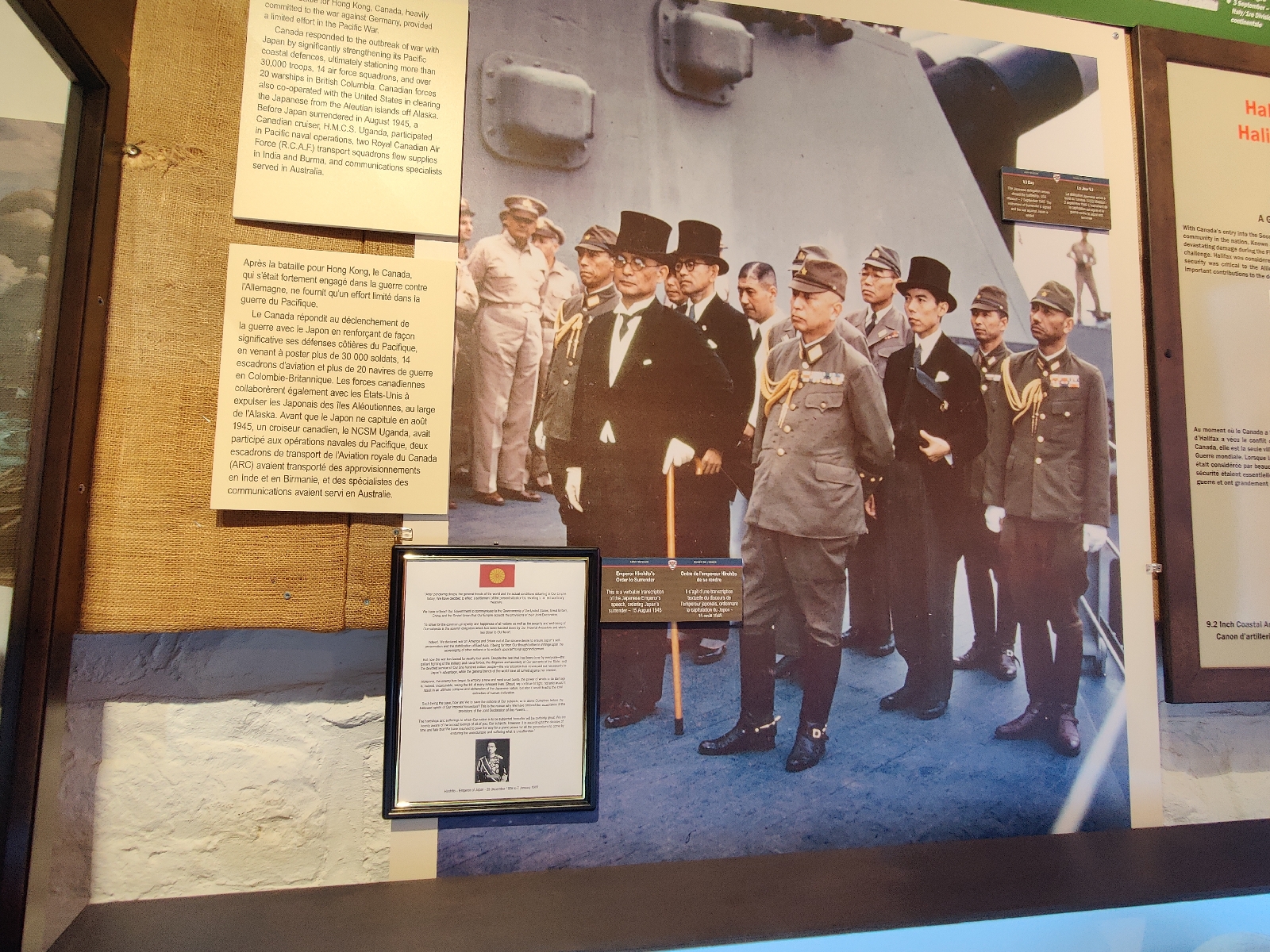
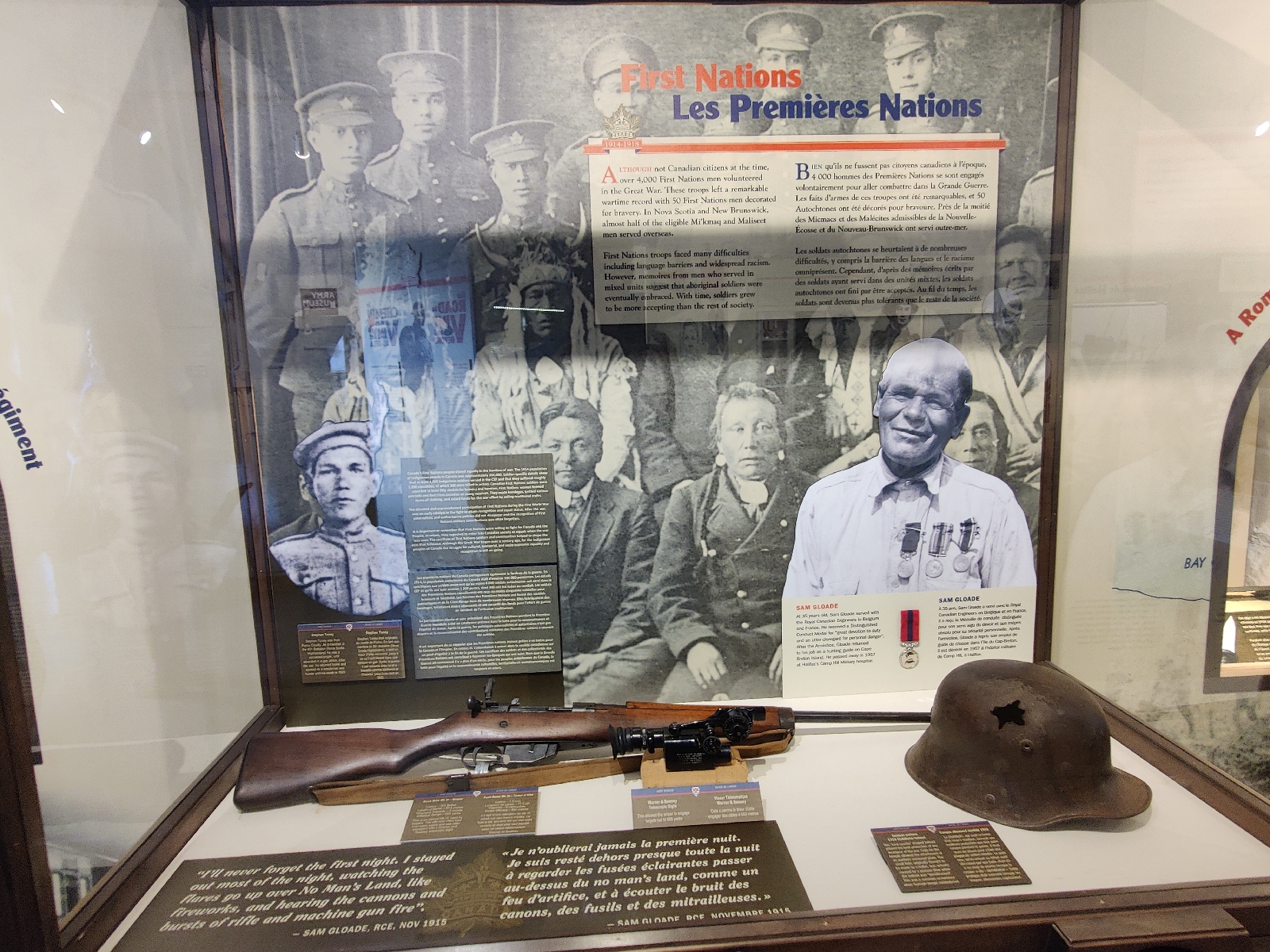
Then I went up to the Citadal/Army museum on top of the hill overlooking the city and harbour and had a look around.

Pretty impressive too!

I don't think I have ever read the Japanese surrender speach before. Pretty chilling both because of the words themselves and because of 'what might have been' had the bomb not existed. The price of American victory with peace was clearly horrendous.  What would the price of continued war and possible American defeat have been? 

To my thinking at least, the Emperor's protestations about only wanting to protect his country, ring rather hollow, but ultimately he made the right decision for the benefit of all. But given what's going on in the world today, it seems that many of those in power don't learn by the mistakes of their predecessors.

Then I walked back to the boat.

I spent most of the following day on the boat pottering about - the first day without Vince - it was a little strange and of course I missed him loads.

The next few days however, saw a flurry of social activity. Rhys and Niamh offered me a lift in their Uber to go shopping and the next day to do the laundry. I also met up with Michael and Sabine on their boat  Blaubeere moored in the marina and a couple of days later we had dinner in the yacht club.

Then Rhys managed to get the two of us berths on a boat competing in the Armdale Yacht Club's regular Wednesday evening race around 'the cans' (a short race) in the 'upper arm' (the name of the stretch of water). 

It turned out the boat (a Sigma 36 - Sharon wanted me to buy one when I was looking for a replacement for Arctic Smoke) to which we were allocated, was owned and skippered by one of Rob's sons. Rob being the guy that Fred and Muna (local OCC members who we met Lunenberg) introduced me to. I hope you're keeping up? 😁

The rest of the regular crew comprised Rob, his other son and one of his pals. The race only lasted 20 minutes but we were probably out on the water for a couple of hours and whilst we tried to look like we knew what we were doing, I suspect the regular crew would have been faster without our help.

Fortunately whilst the race was keenly fought, everyone was also very relaxed and the beers and other drinks were passed around even before the starting gun - which we only just made thanks to a temperamental engine!

The Armdale guys were a really friendly bunch. I just hope that any Canadian sailors venturing to the UK, get treated as well as we were by them.

Just before we went off to the races we bumped into Michi and Steffi from T'Aima, who Vince and I met in Shelburne. With their arrival, there were four OCC boats in the Armdale Arm and Rhys (who's a "Roving Rear Commodore" of the OCC) had tracked down two other boats (one Swedish and one Australian) who were interested in joining and so he organised a get-together for us all at the Armdale Yacht Club. John, the OCC Port Officer for Halifax also came along as did Michael and Sabine and so we had quite a gathering, which continued on Rhys' boat when the yacht club closed. However, I'm afraid that once again I forgot to take photographs.

I had made an attempt to leave Armdale on the Wednesday, but the Anchor windless was playing up and so aborted the trip - which was probably just as well otherwise I would have missed out on all the fun. 

It was actually quite a nerve wracking and bruising episode. First the dam thing wouldn't run. Then after prodding and tapping it did. Then the dam thing wouldn't stop. I dashed back to cockpit and inside to kill it with the isolator switch, slipped on the companionway steps and took a right wolloping. Nothing broken but I'm still sore days later, when I pull ropes or wind winches etc. Knocked stupid I forgot where the isolator was for a while! Anyway eventually I found it.

Later I took the deck switch apart and with Rhys help cleaned it up and re-installed it. Problem solved or so I thought!

Stay tuned!